Grüezi, welcome into my artistic research
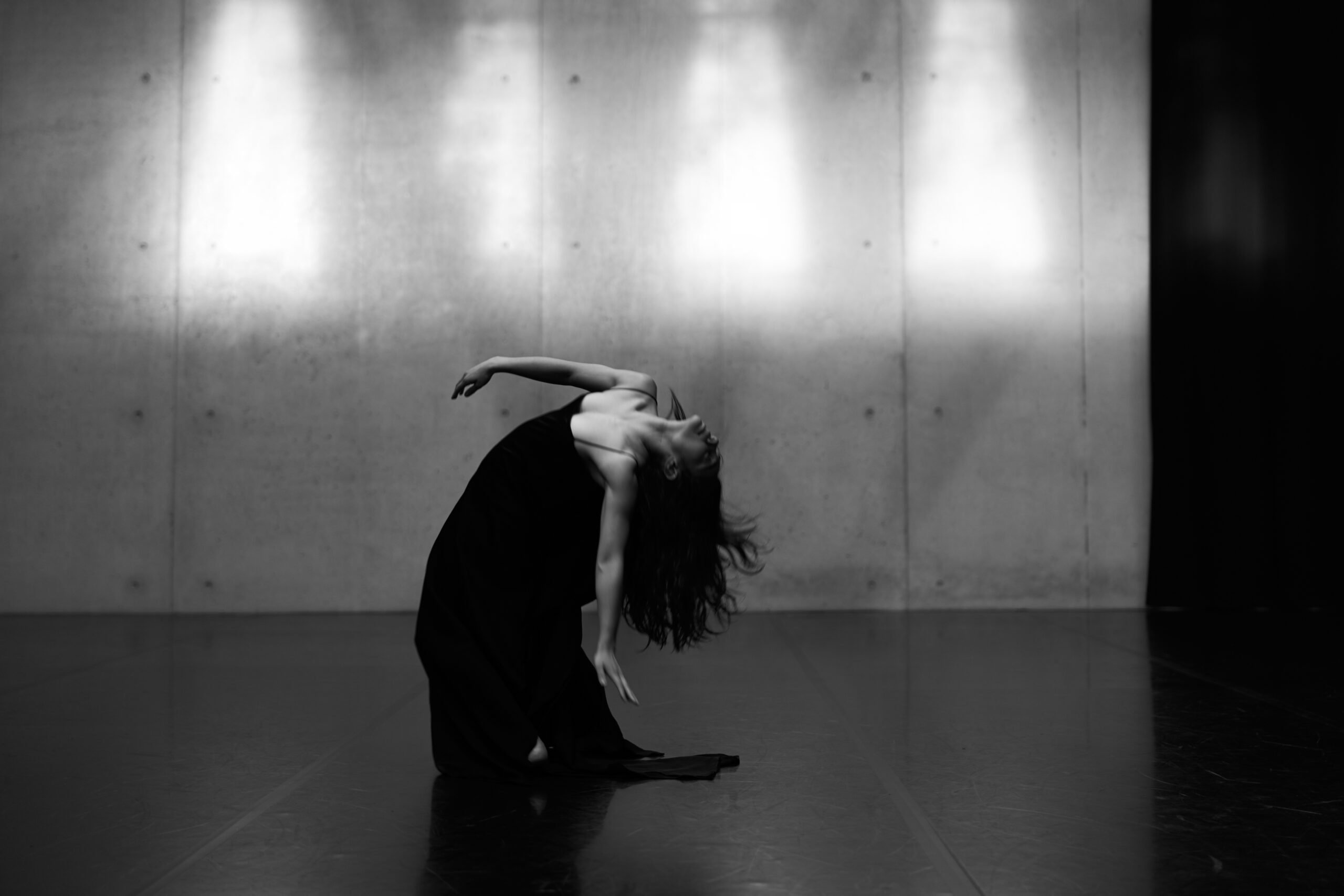
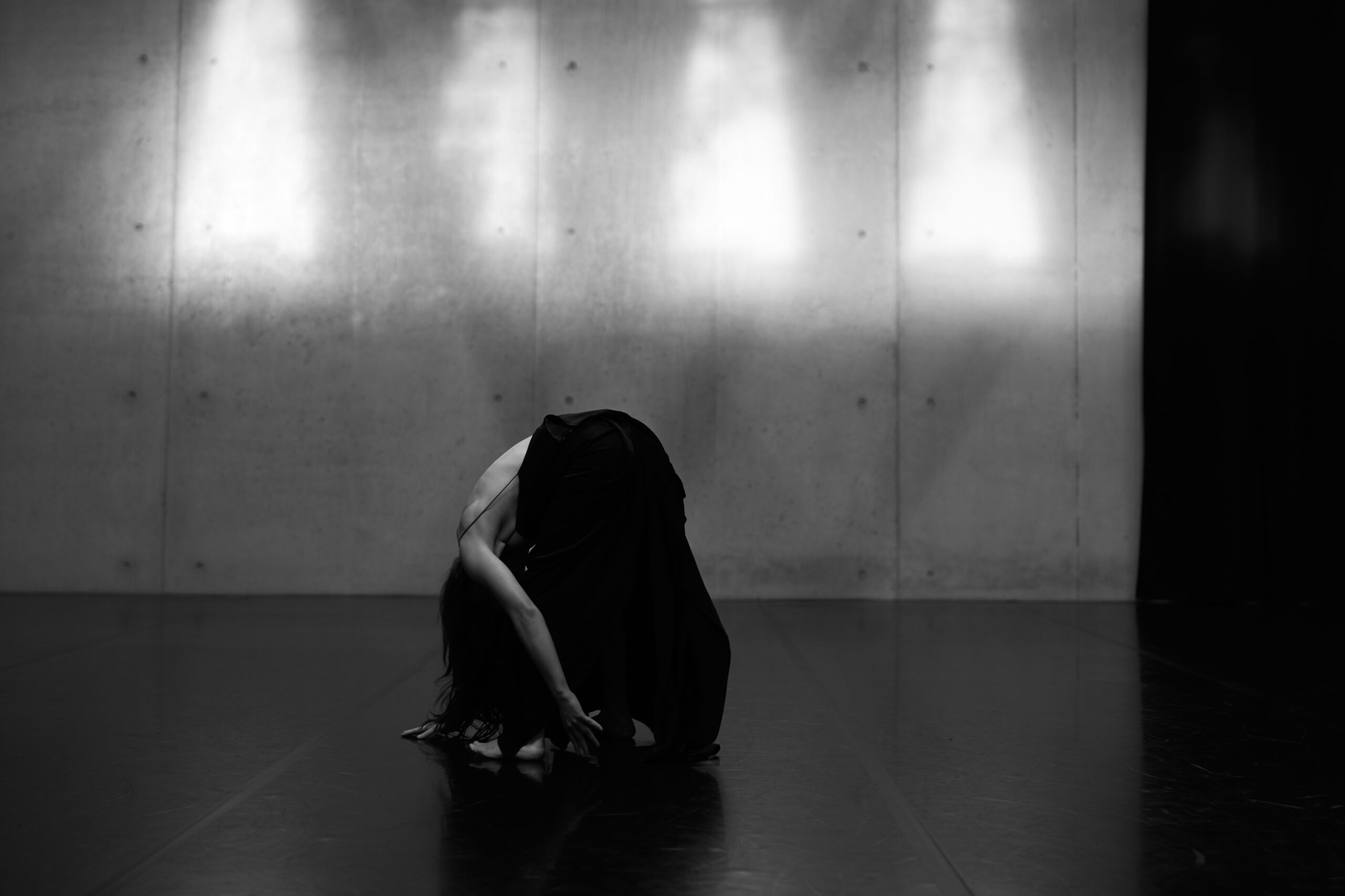
29.10.2025 – Nadika Mohn
©Marco Wolff
Reperforming the Female Body:
Gaze and Transformation in the Transmission of a Solo Work
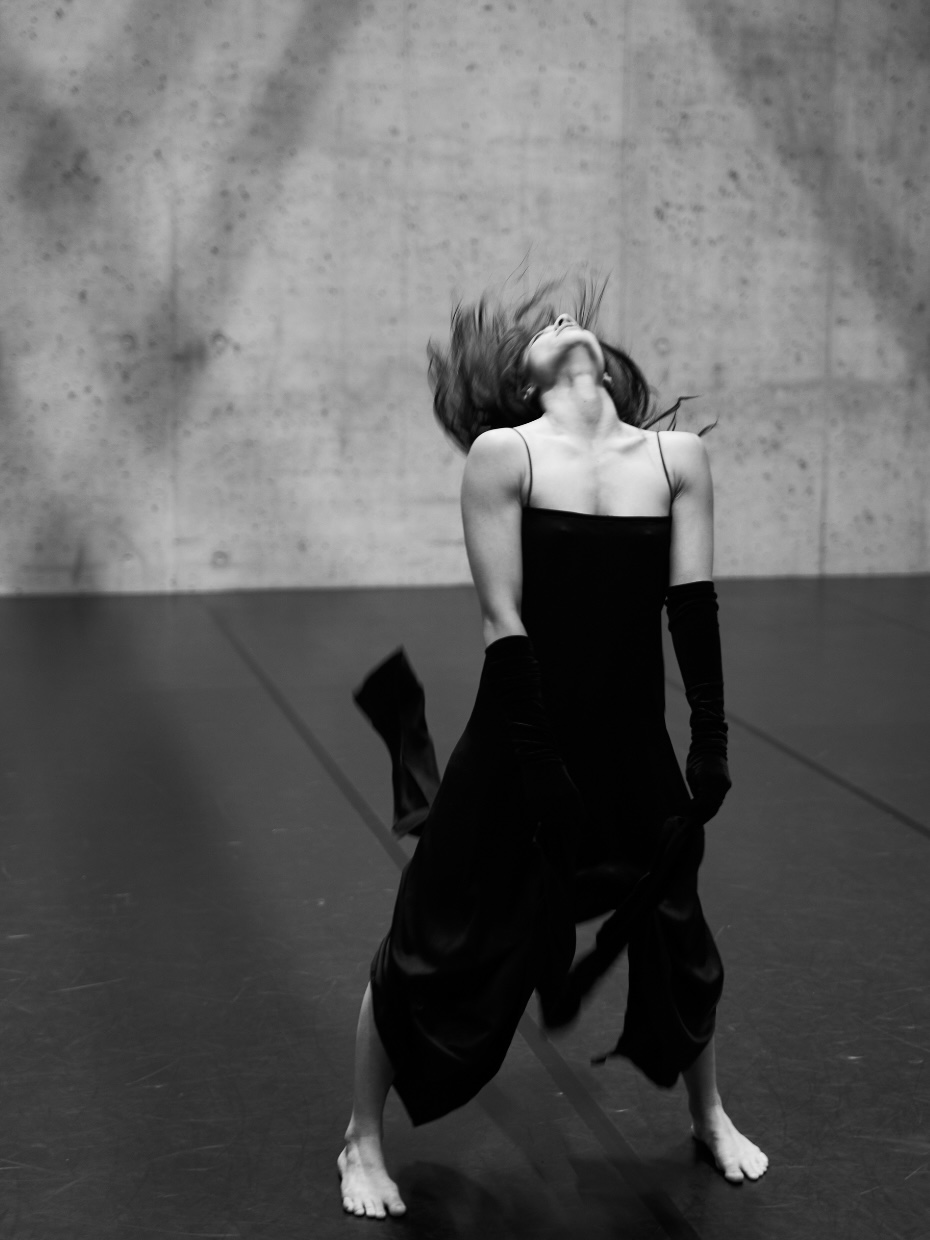
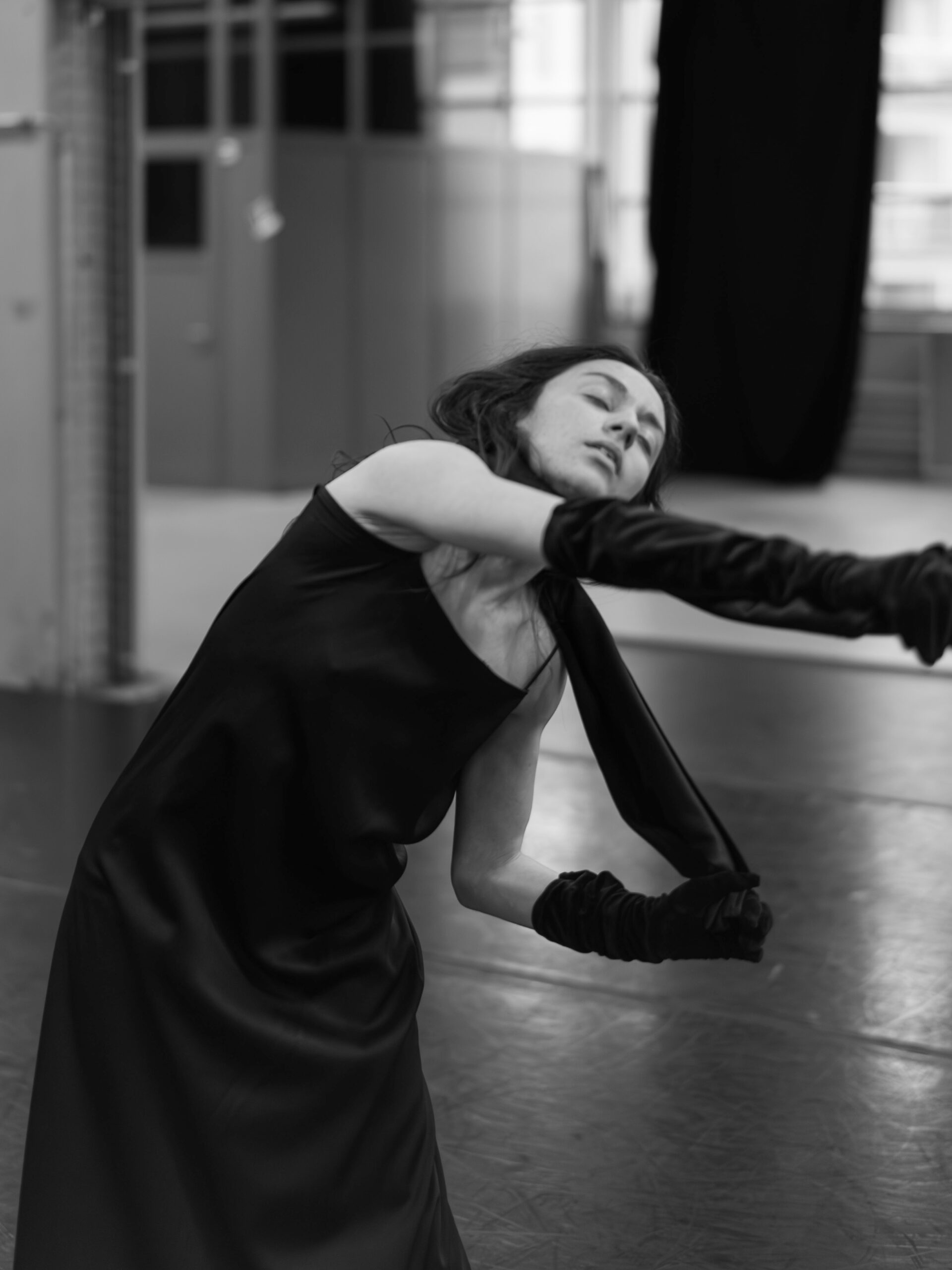
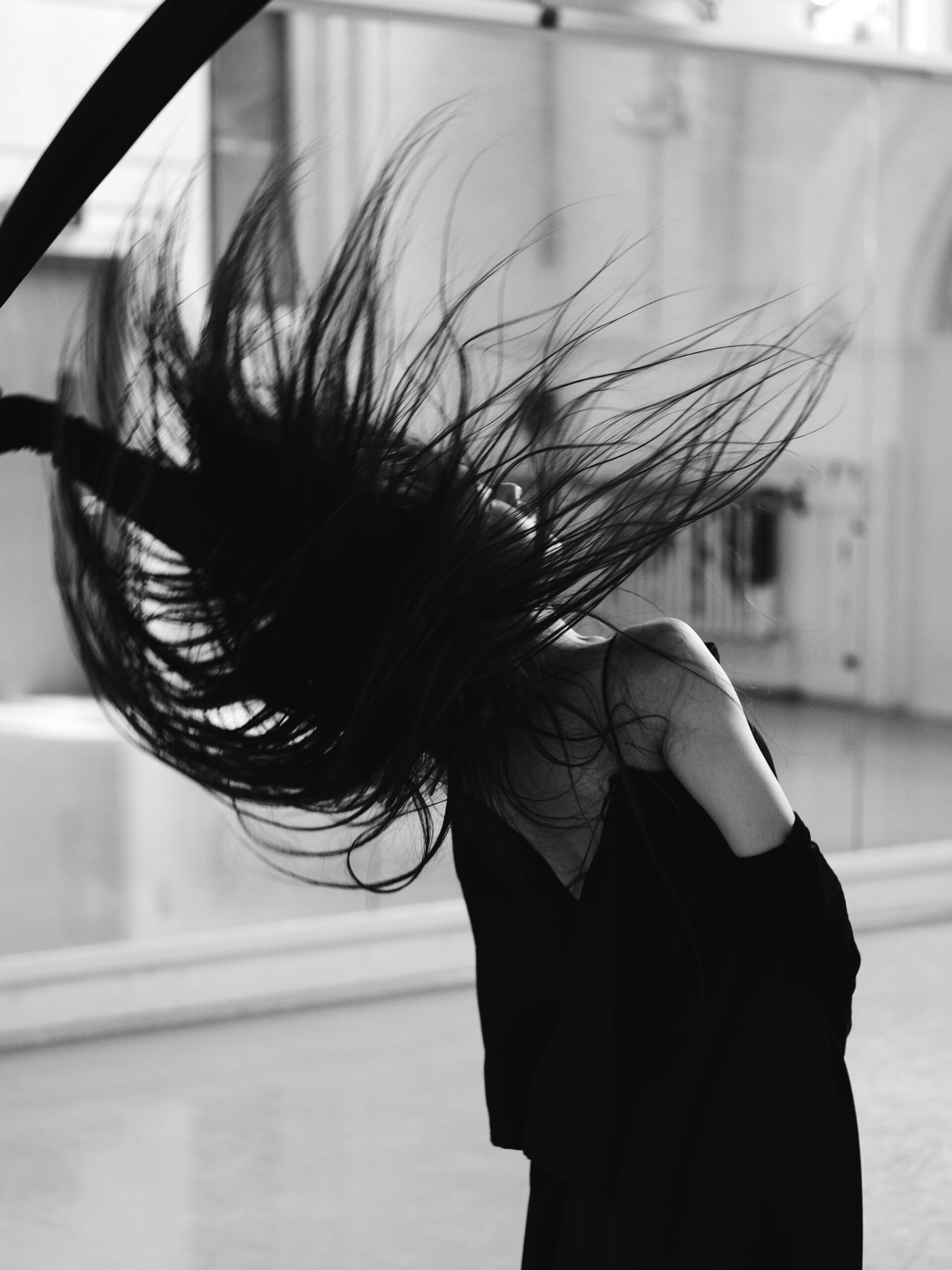
29.10.2025 – Nadika Mohn
©Marco Wolff
14.06.2026 – Romane Ruggerio
©David Lagerqvist
28.06.2026 – Ching-Ying Chien
©Nitika Jain
My name is Nadika Mohn. I am a Swiss-Sri Lankan freelance dance artist and choreographer based in St. Gallen, Switzerland.
My current artistic research moves between dance, choreography, embodiment, feminist theory, and the question of how the female body is seen on stage. Over the past year, these questions have become central to my studio practice and have led me to the MA Dance Research programme at Rambert School of Ballet and Contemporary Dance in London.
This website is a space for my ongoing process and thoughts. It brings together fragments of my dance practice, choreographic reflections on my solo work Like Me, rehearsal materials, and theoretical questions. My research is mainly influenced by Laura Mulvey’s theory of the male gaze and voyeurism, as well as Judith Butler’s concept of gender performativity.
Through the transmission of my solo work Like Me to two different female dancers, I am researching how the female body is seen, repeated, transformed, objectified, and re-embodied on stage. My research method is rooted in collaborative autoethnography and phenomenology: I work from my own embodied experience, while also listening to how other dancers experience, interpret, and transform the same choreographic material. At the same time, I observe how the gaze from the outside shapes the perception of the piece, the body, and its meaning.
This process leads me to ask: How is embodied identity reshaped through choreographic repetition and the gaze of others in performance? And how does the transmission of a solo across different bodies reveal shifts between humanisation, objectification, and dehumanisation under the gaze?
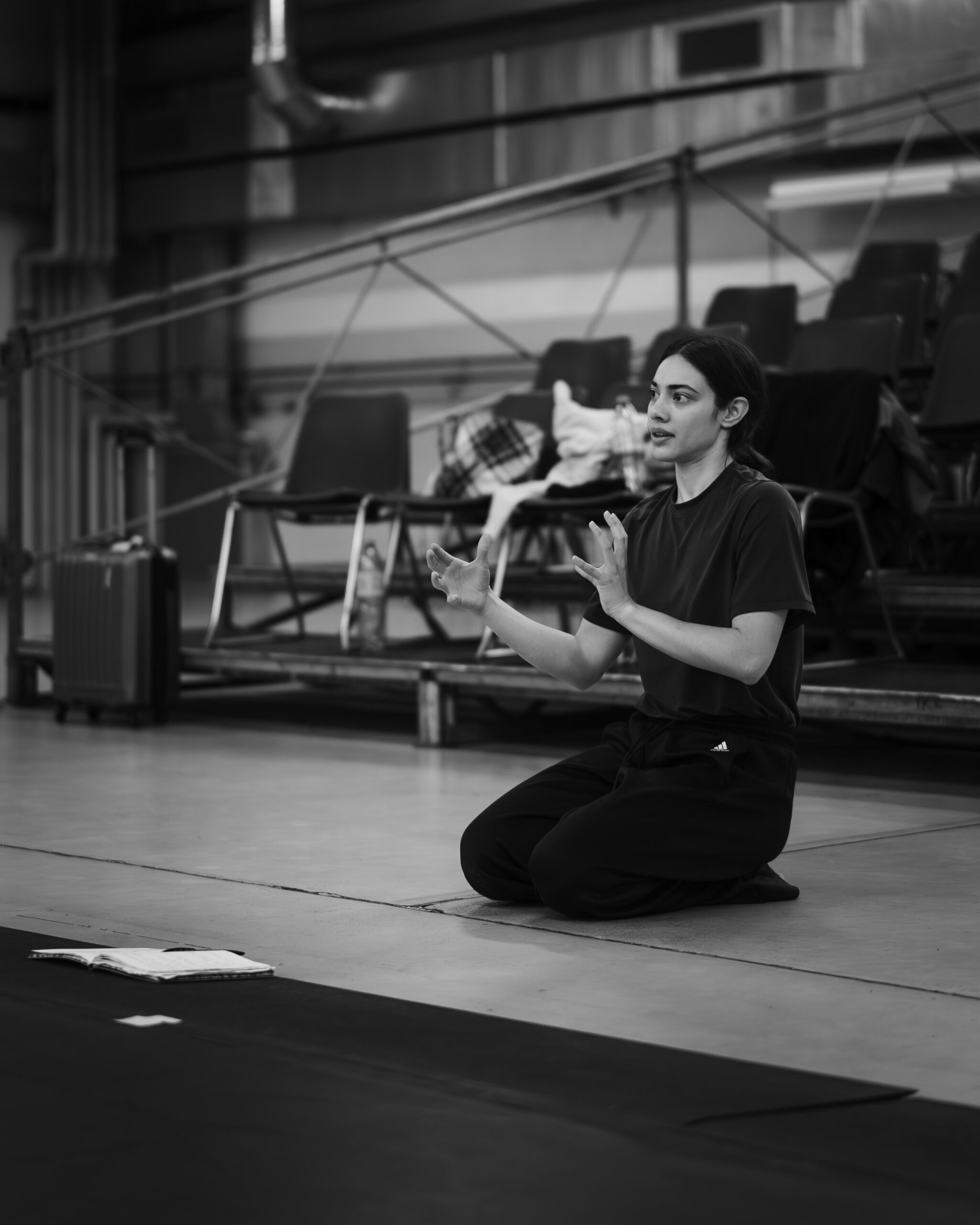
14.06.2026 – Nadika Mohn
©David Lagerqvist
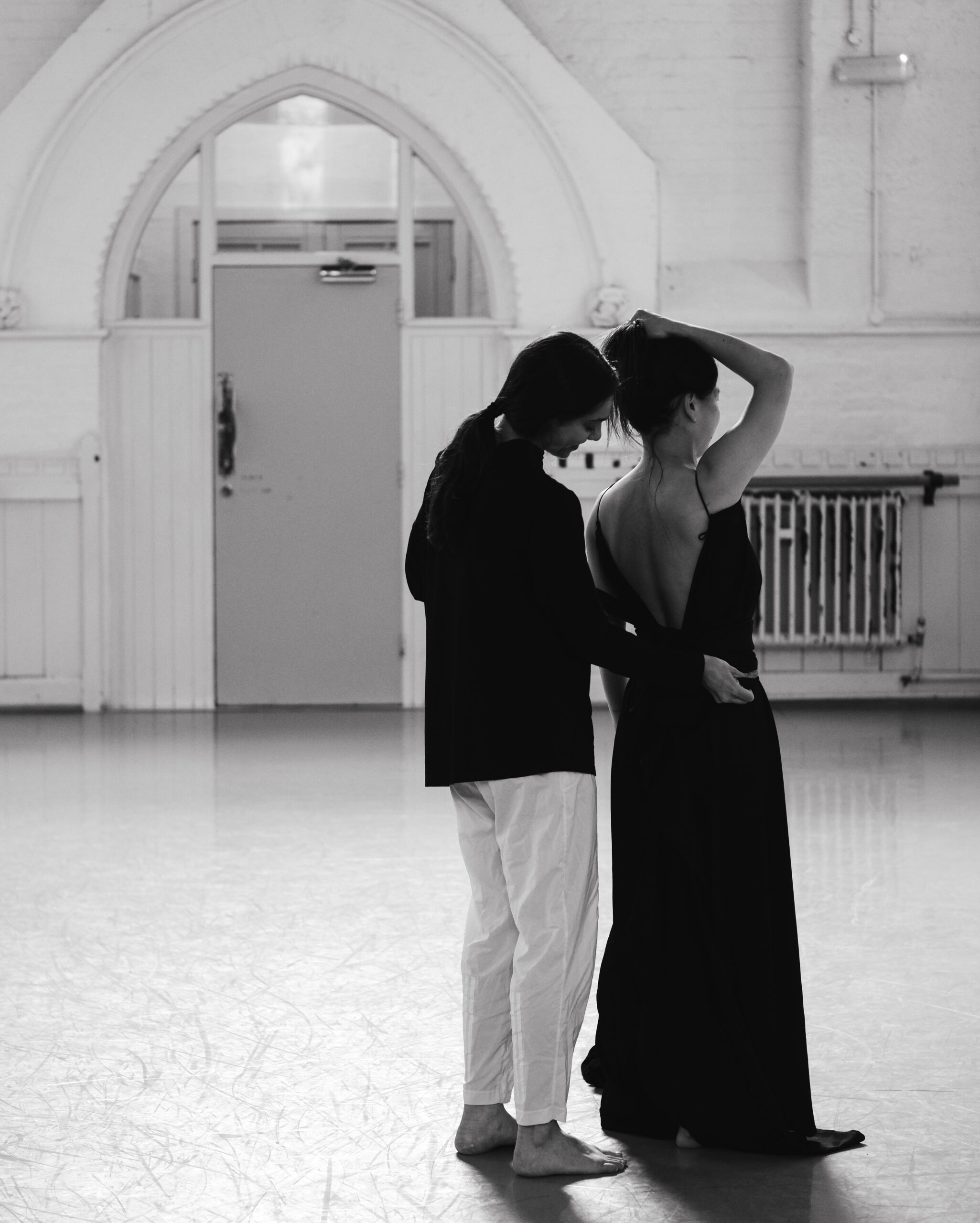
28.06.2026 – Nadika Mohn and Ching-Ying Chien
©Nitika Jain
Phase 1: March – April 2025
The first phase began with the creation process of the solo work Like Me. I felt a strong need to return to an older one-hour piece and transform some of its experiences into a shorter version. Through this process, I wanted to reflect on what still felt like “me” in the work: which movements still belonged to me, and what had changed over time.
With these questions: Who am I? What is still like me? I came to the wordplay Like Me. It can mean “you are like me”, as if we share the same interests, habits, or desires. But it can also be read as an invitation, or even a demand: like me. Who follows whom? Who is looking at whom?
This wordplay connected the work directly to social media, a space where we judge ourselves and are judged by others. Through something as simple as clicking a “like” button, we take part in deciding whether someone else’s image, body, or post is accepted, valued, or rejected.
From there, I began to think more deeply about the female body and its objectification, as well as the ways we represent ourselves online. Social media creates a constant comparison with others and made me question how much of my identity is performed for others. This led me towards Judith Butler’s idea that gender, and perhaps identity more broadly, is something we perform. We may act differently depending on the social situations we are in, and through these repeated actions, identity becomes something that is continuously constructed.
Connected to this idea, I did not begin directly in the studio. Instead, I started by making small, quick sketches from specific social media accounts, observing how bodies were posed, framed, and presented for an imagined audience. I was especially interested in discovering the direction of certain gestures: how the body was placed in the picture, where it opened or closed, and how curves, lines, and angles created a certain image of femininity.
Some of these images reminded me of pornographic imagery, which I found artistically interesting because of the tension between exposure and privacy, desire and vulnerability, seduction and emotional coldness. Through these sketches, I began to notice how small gestures can shift the meaning of an image: hands on the hips can suggest pride while drawing attention to the curves of the female body; looking over the shoulder can appear elegant, playful, or seductive; hands near the face or hair can create a more intimate atmosphere.
Rather than copying the details, I focused on the general direction, shape, and spatial placement of the body. Somehow, I was not focused on facial expression at all. The face appeared more as an angle or direction within the image, rather than as an emotional expression. These observations later entered the studio, where I explored how one simple gesture could be embodied, repeated, and transformed in different ways.
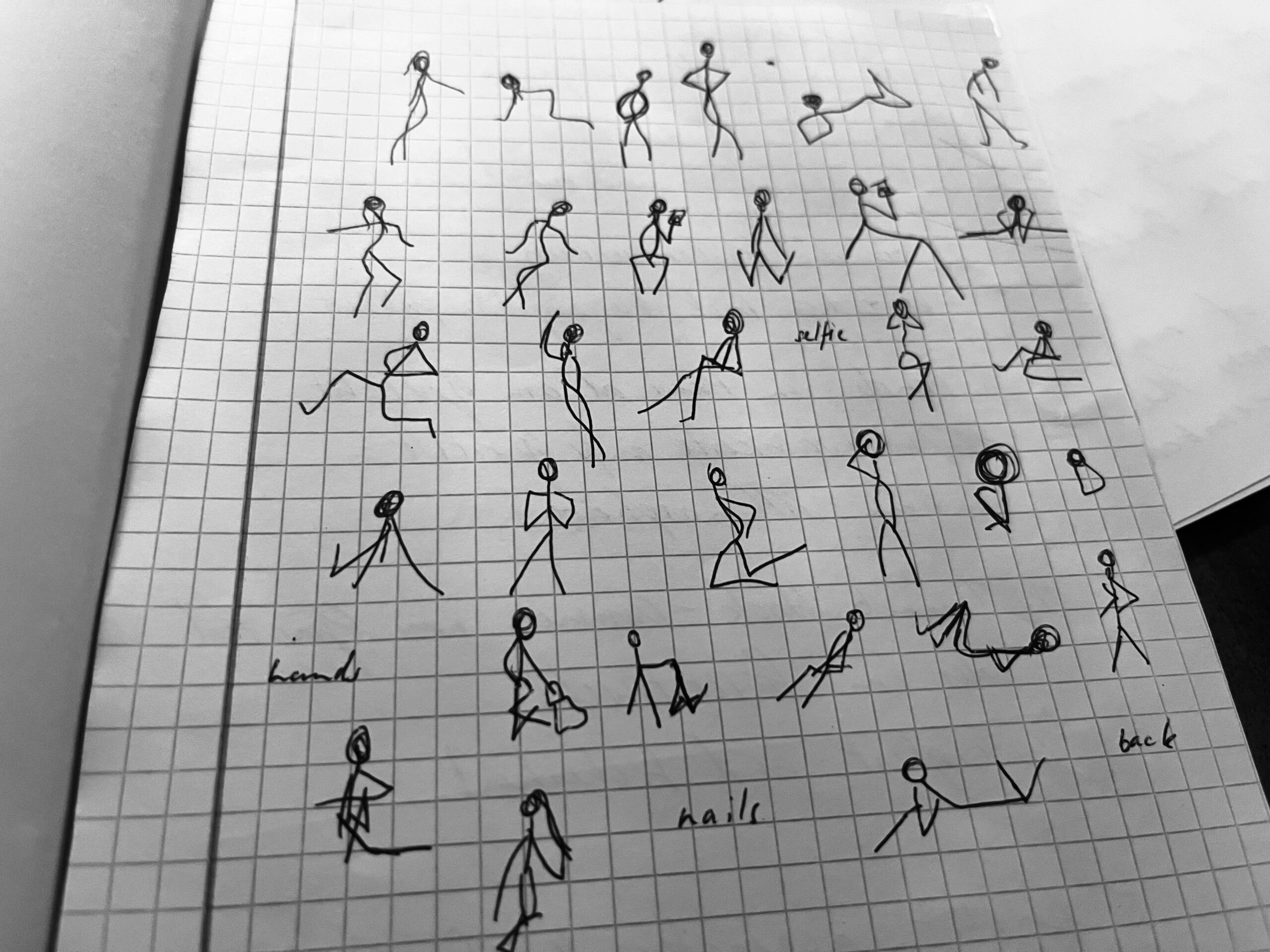
22.04.2025
©Nadika Mohn
Phase 2: April – May 2025
As the research became more specific, I began to look for collaborators and support through residencies, funding, and coaching. A major support throughout the year was Caroline Finn, who accompanied me as an outside eye within the DoubleTanz programme by Migros Kulturprozent, including a residency at Tanzhaus Zurich. Costume designer Priska Bruegger became an important collaborator in developing a dress that could transform and function almost like a second skin, or like an identity placed onto the body. Composer and sound designer Luca Bruegger created a sound world that moves from pop-cultural references into insect and amphibian sounds, transformed domestic vacuum cleaner noises, and later the sound of the “like me” button, which gradually turns into piano hits and melody.
The Inkubator programme at Rote Fabrik Zurich gave me another important residency period, with studio time and dramaturgical mentoring from Stephan Stock and Marysa Godoy. Their input helped me understand how my thoughts could become clearer through combining movement and performance. Through this programme, light designer Dayne Florence also joined the team and created a focused stage atmosphere. The narrowed light space became essential, supporting the feeling of restriction and confinement while drawing attention to the transformation within the work. Through specific colours and angles, the lighting created distinct atmospheres: an enclosed, mysterious space for the floor-based material, and a more exposed, beautiful image for the standing part. We worked a lot with the angles of the light to shape these different states.
The research was also supported by the Performing Arts Fund and partly through an artist grant for the further development of work visions from the Ausserrhodische Kulturstiftung of Appenzell Ausserrhoden, the region where I mainly grew up.
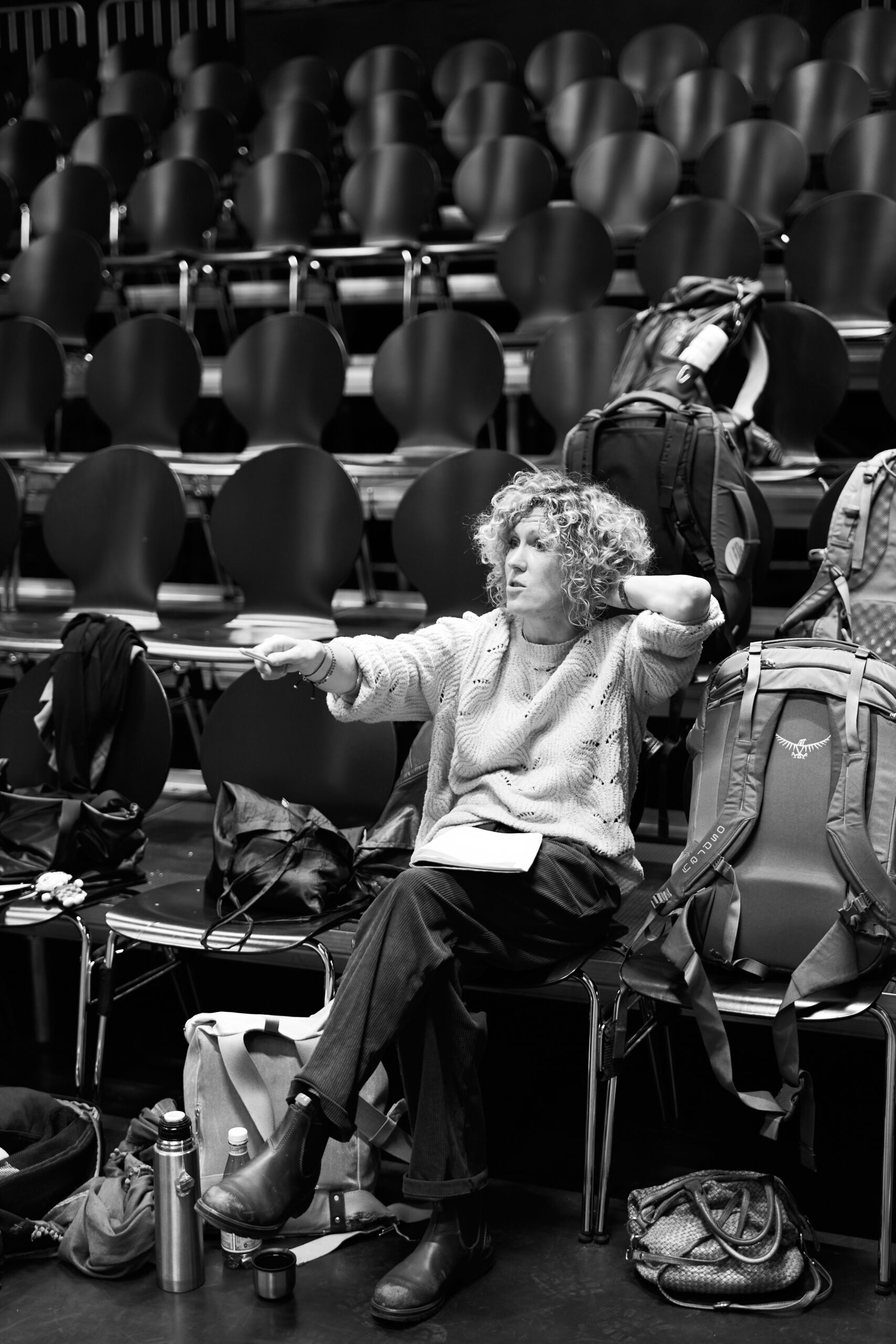
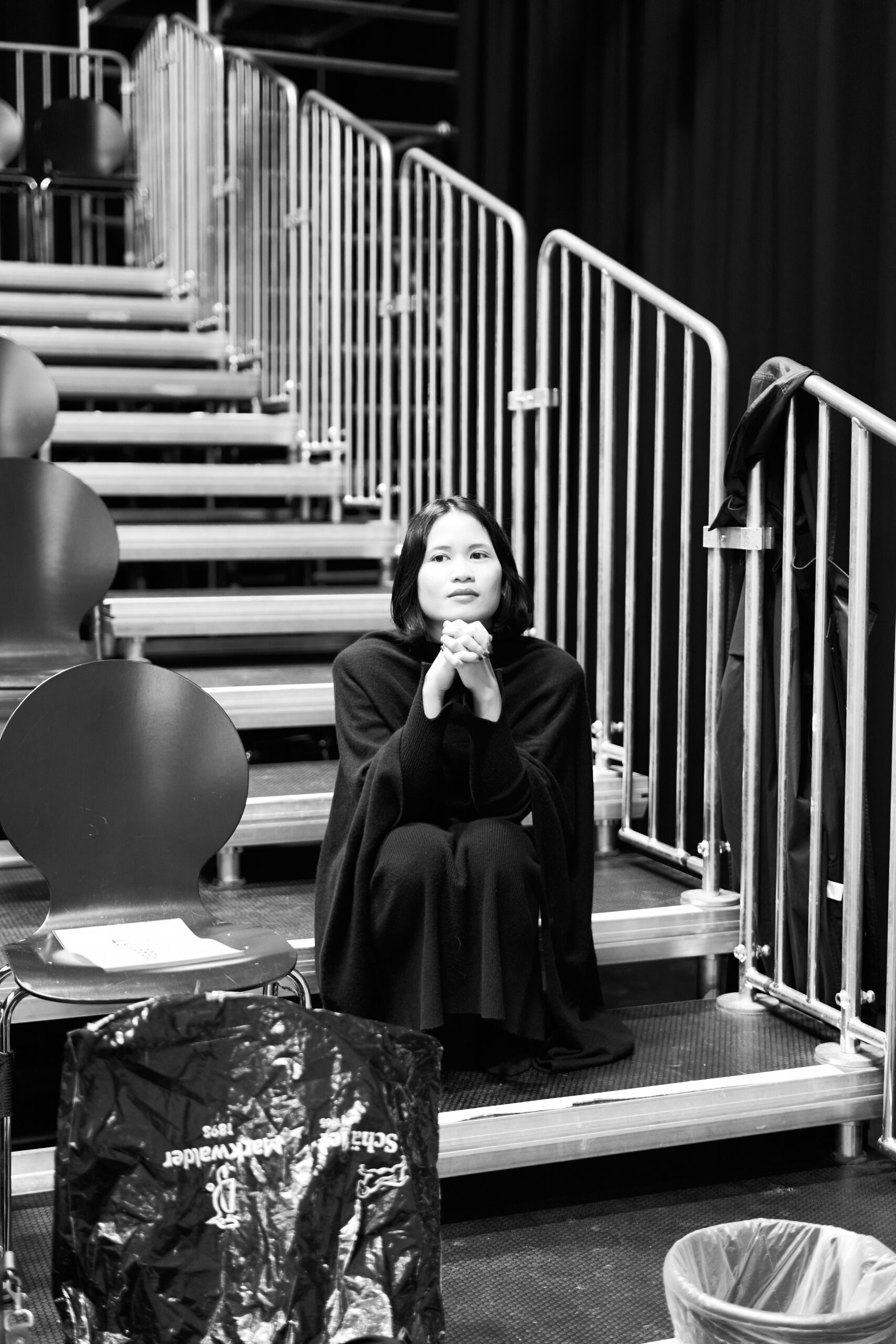
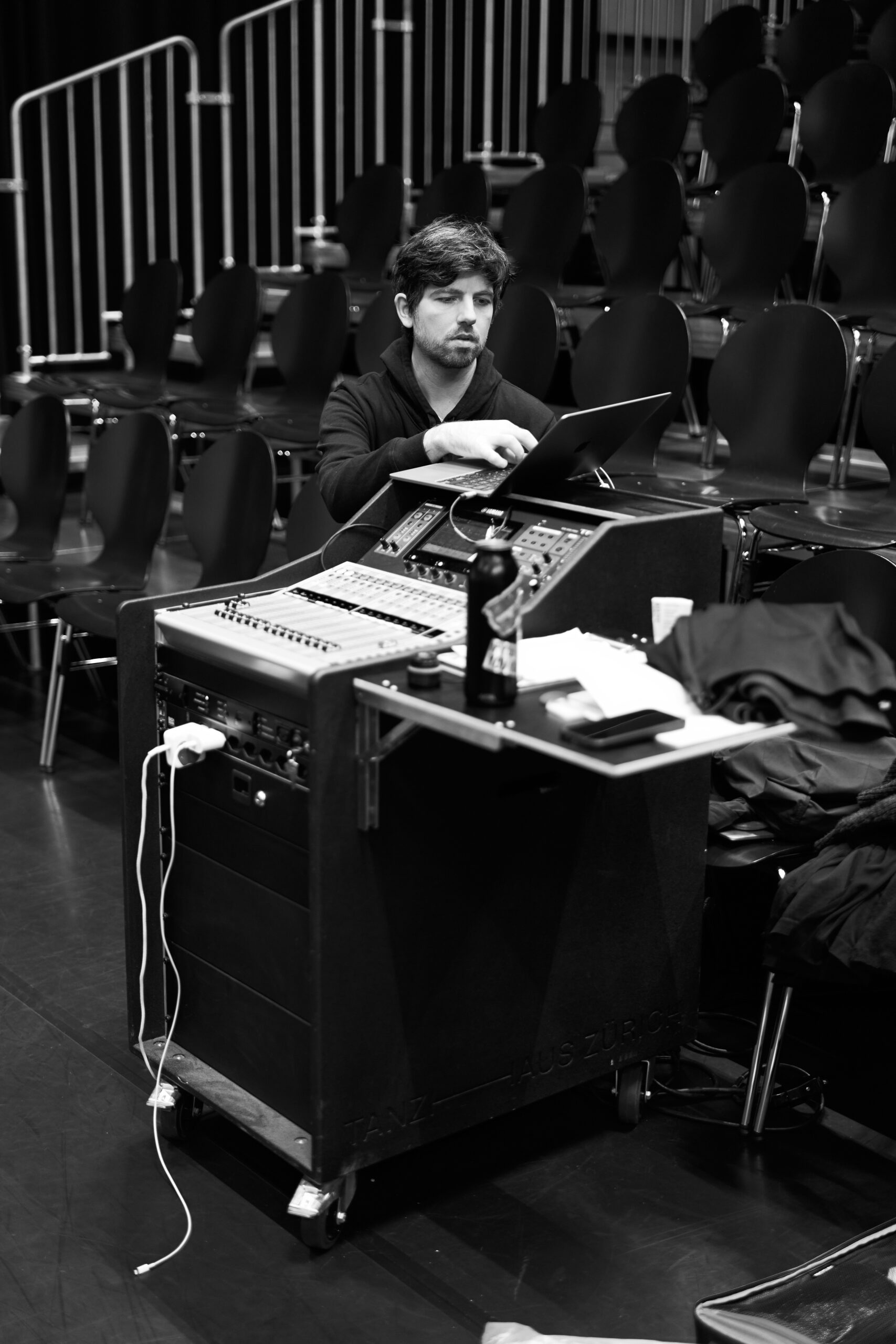
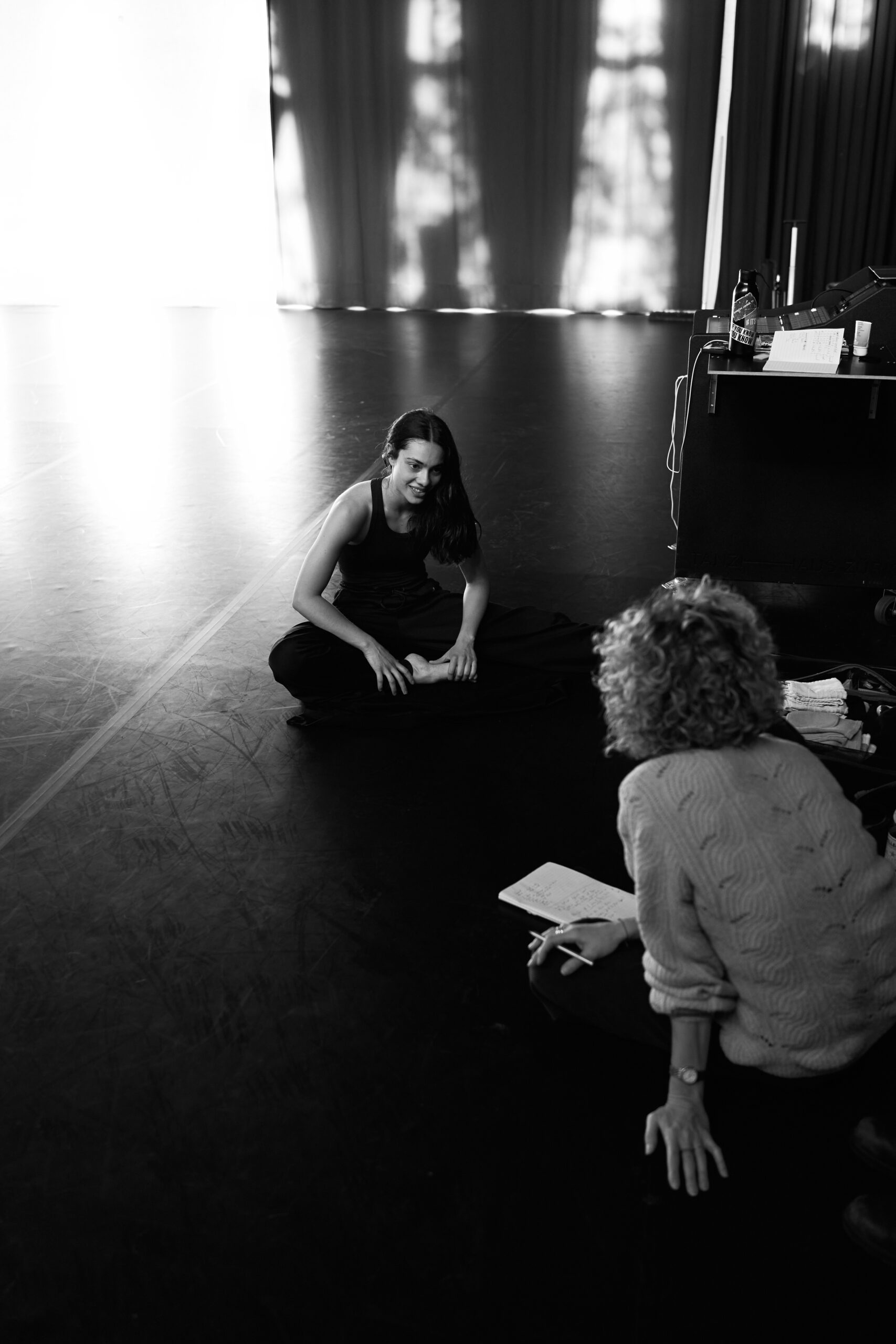
29.10.2025 – Caroline Finn
©Marco Wolff
29.10.2025 – Priska Bruegger
©Marco Wolff
29.10.2025 – Luca Bruegger
©Marco Wolff
29.10.2025 – Nadika Mohn with Caroline Finn
©Marco Wolff
Phase 3: June – July 2025
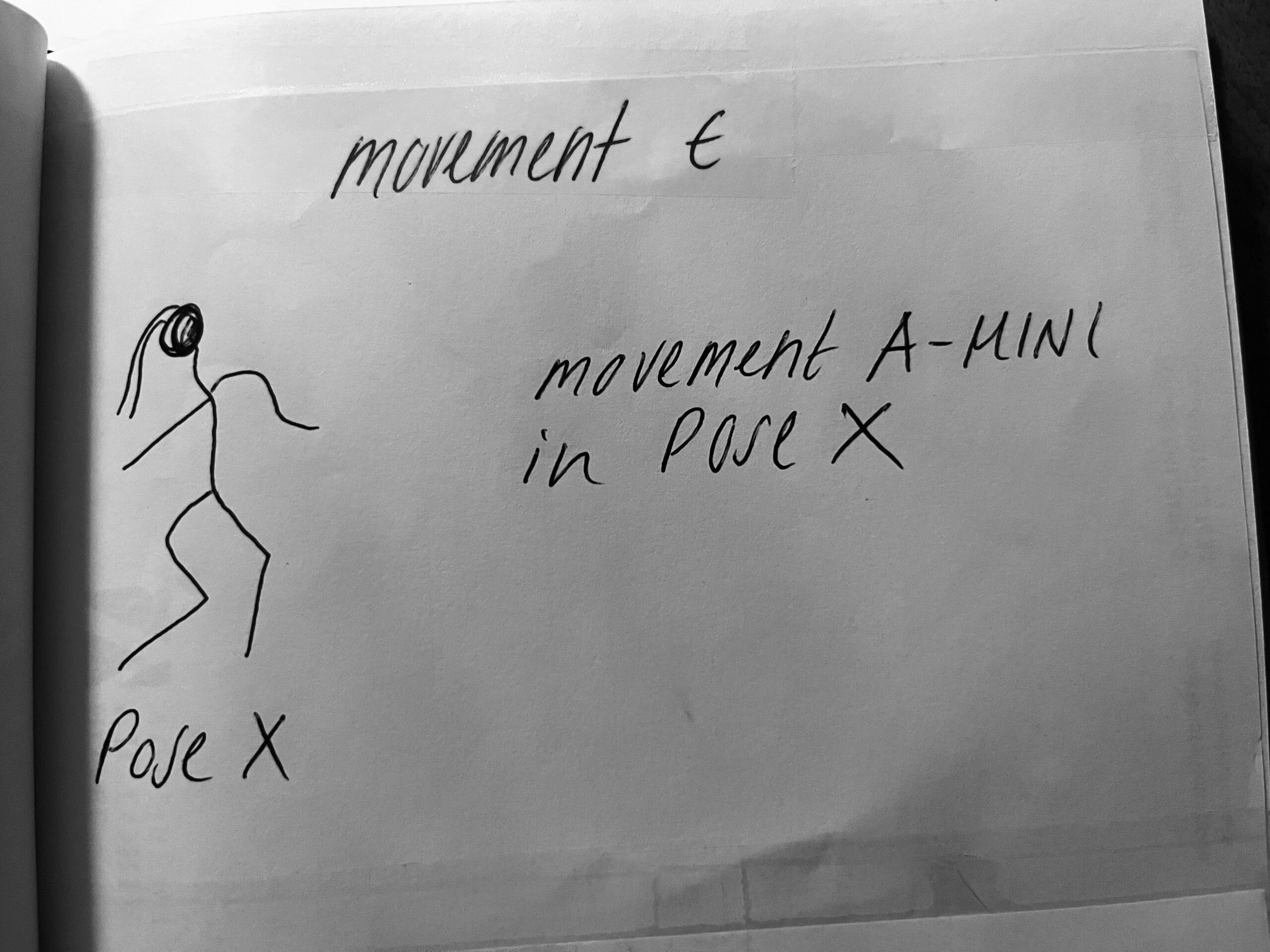
Phase three was shaped by spending a lot of time in the studio with Caroline Finn, discovering where the poses could go once they were brought back into movement. There was something funny and slightly absurd in the process: I was taking inspiration from frozen images and asking how they could become physical, alive, and performative again.
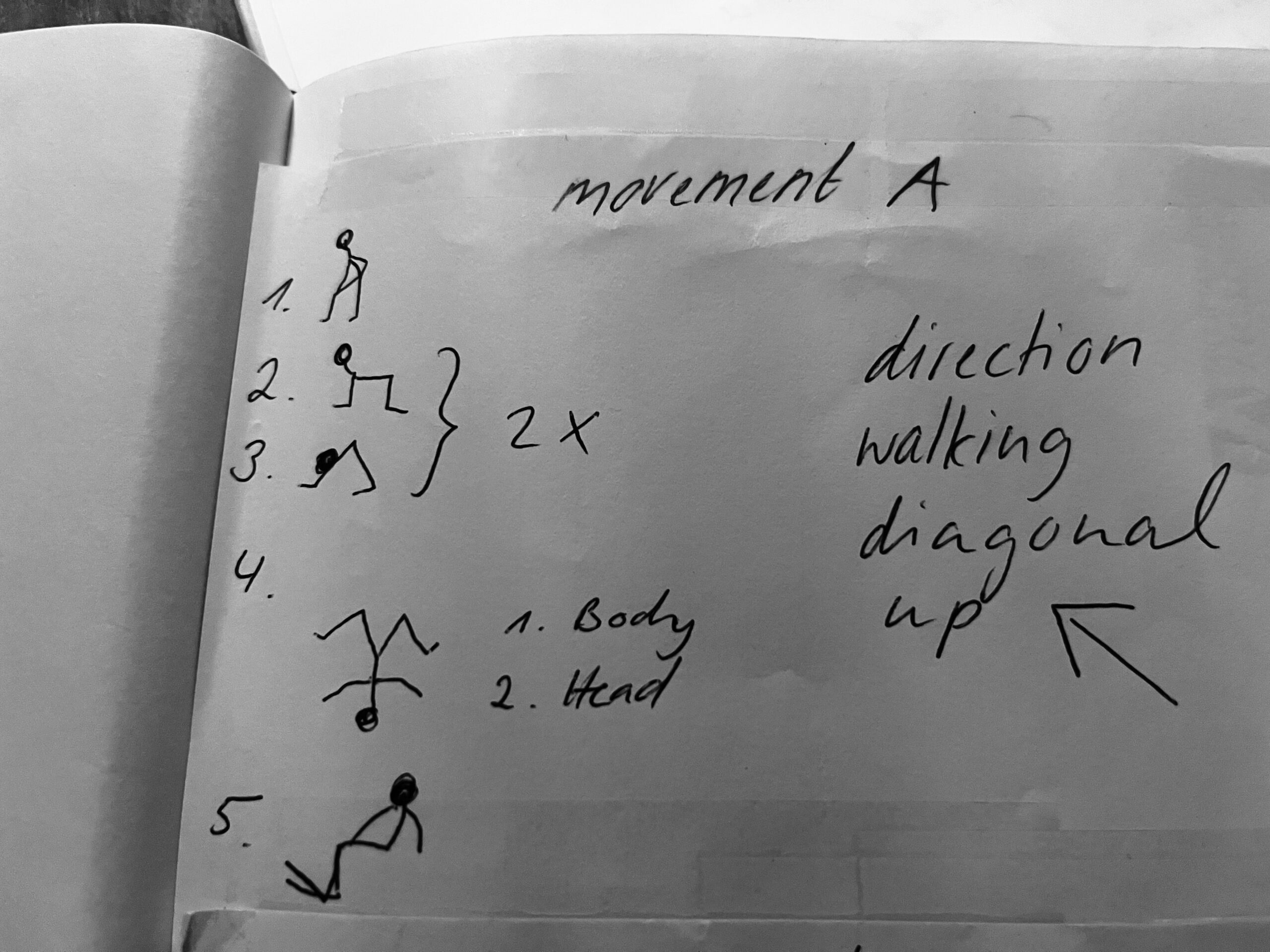
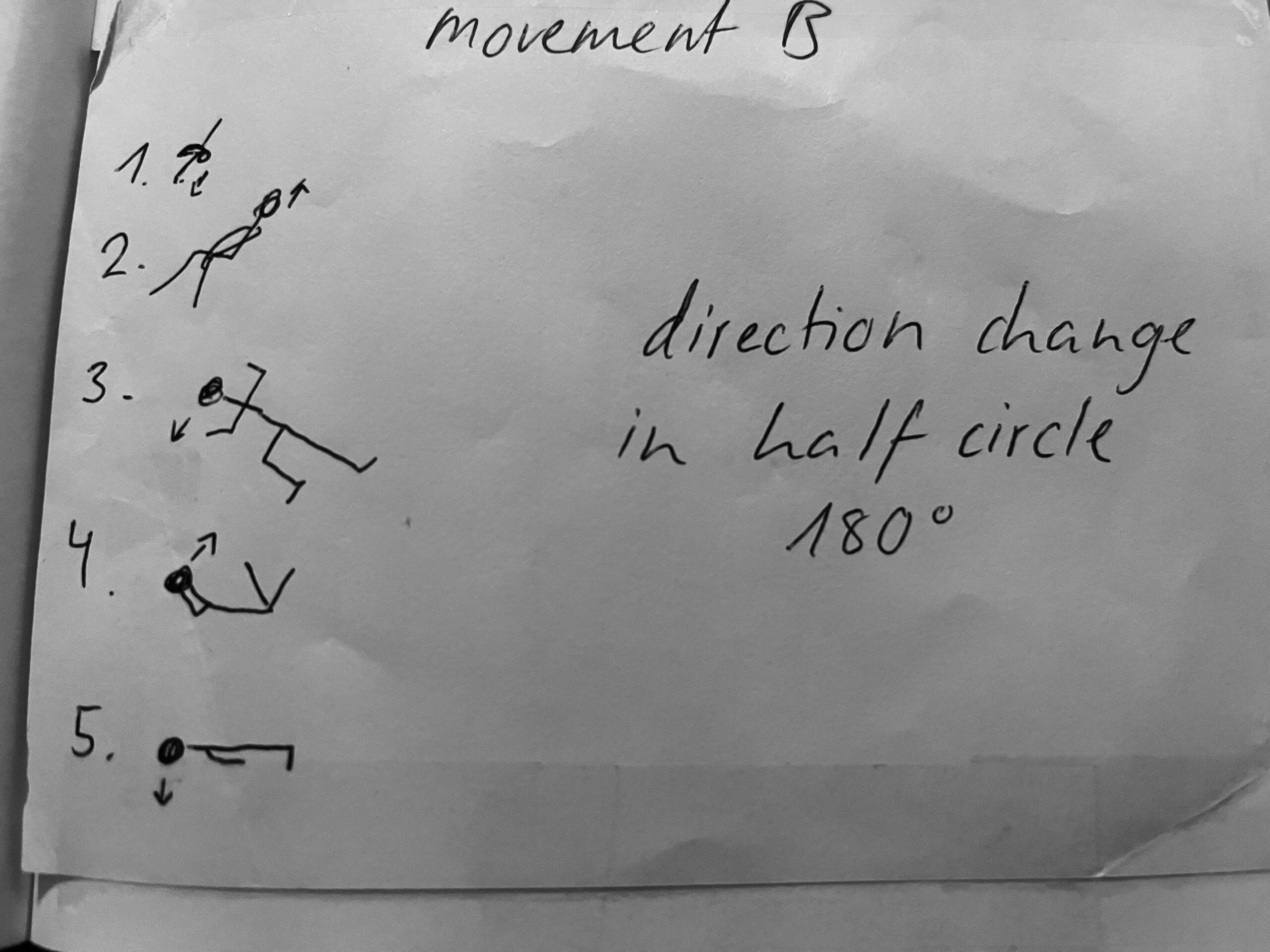
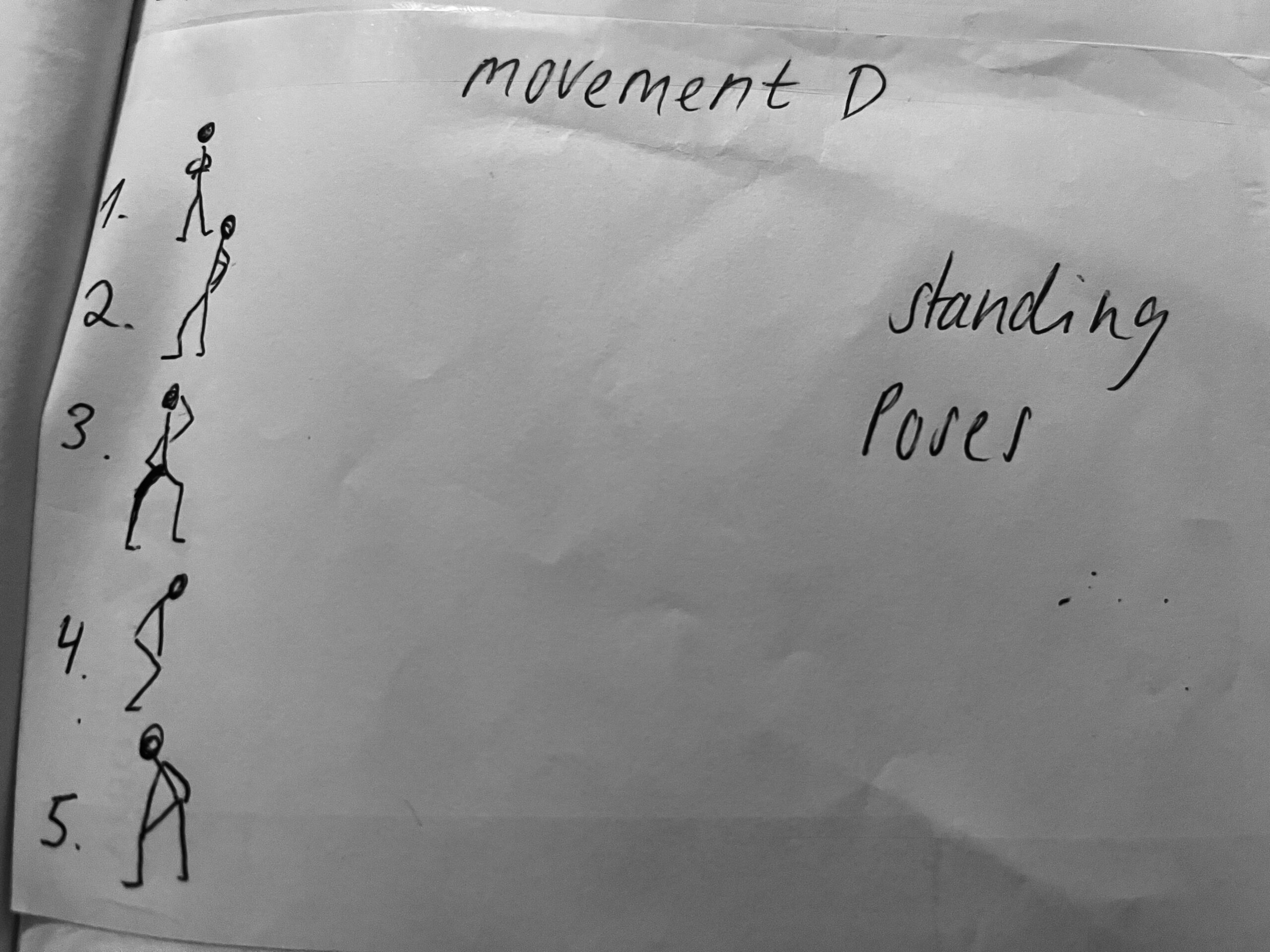
Together, we explored how one pose could shift into the next through different movement qualities. I decided to use as little extra movement as possible, avoiding any decorative dance material. This efficiency became an important part of the work. I became interested in how the body could move with precision, control, and repetition, almost as if it were trying to fulfil a hunger for perfection. In this, I recognised something I connect to the dance environment between female dancers: the pressure to work hard, to appear effortless, and to constantly adjust oneself towards an image or expectation.
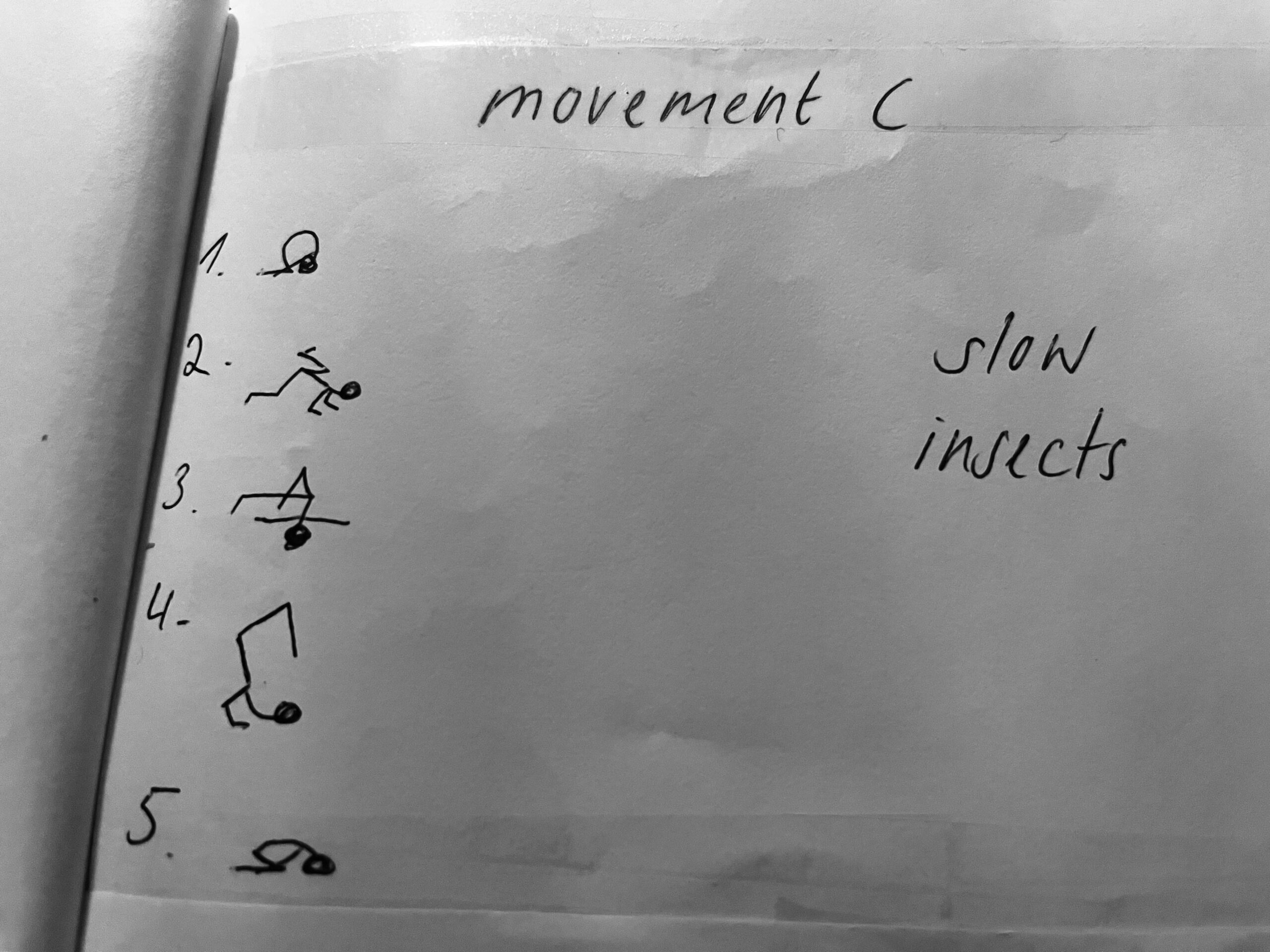
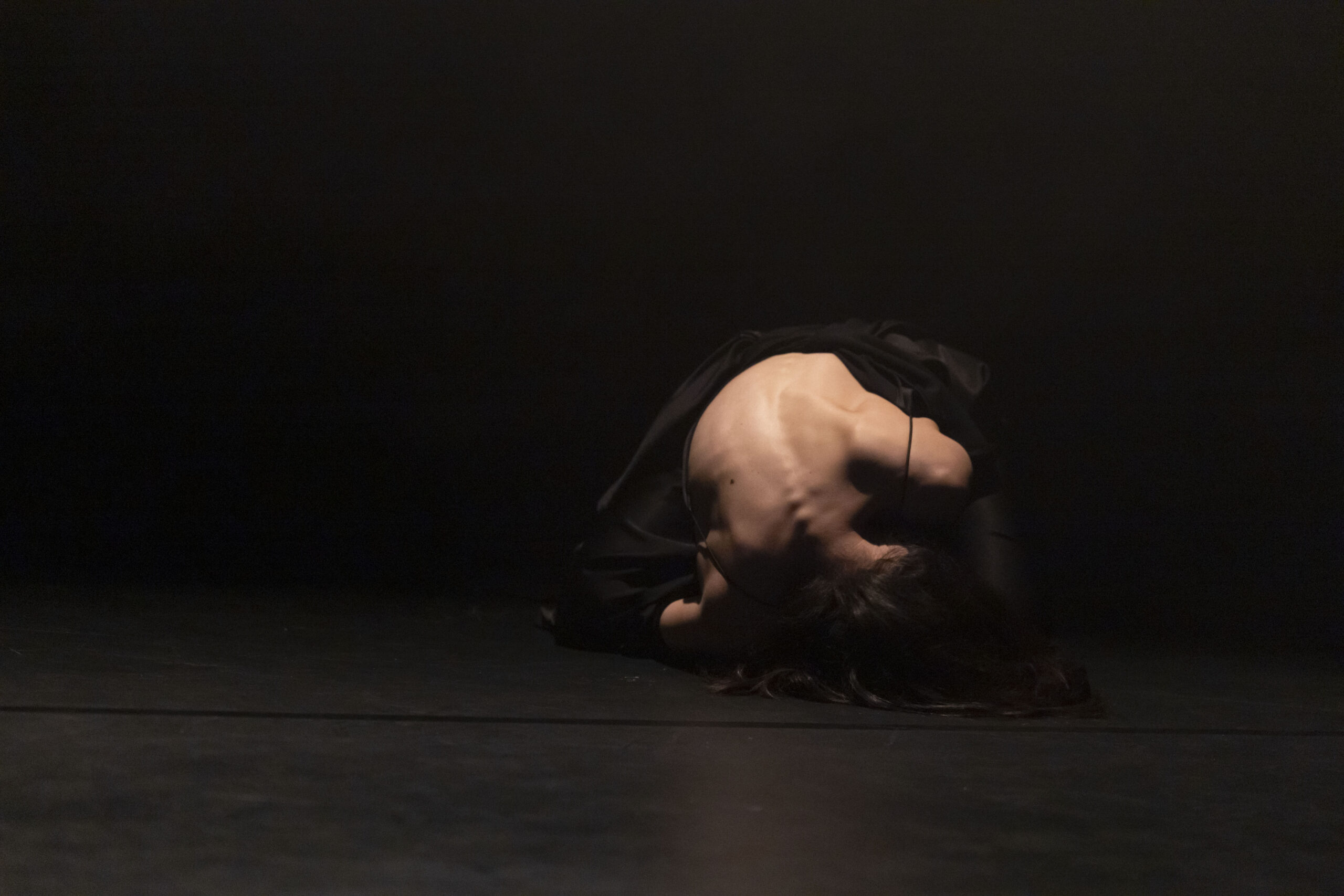
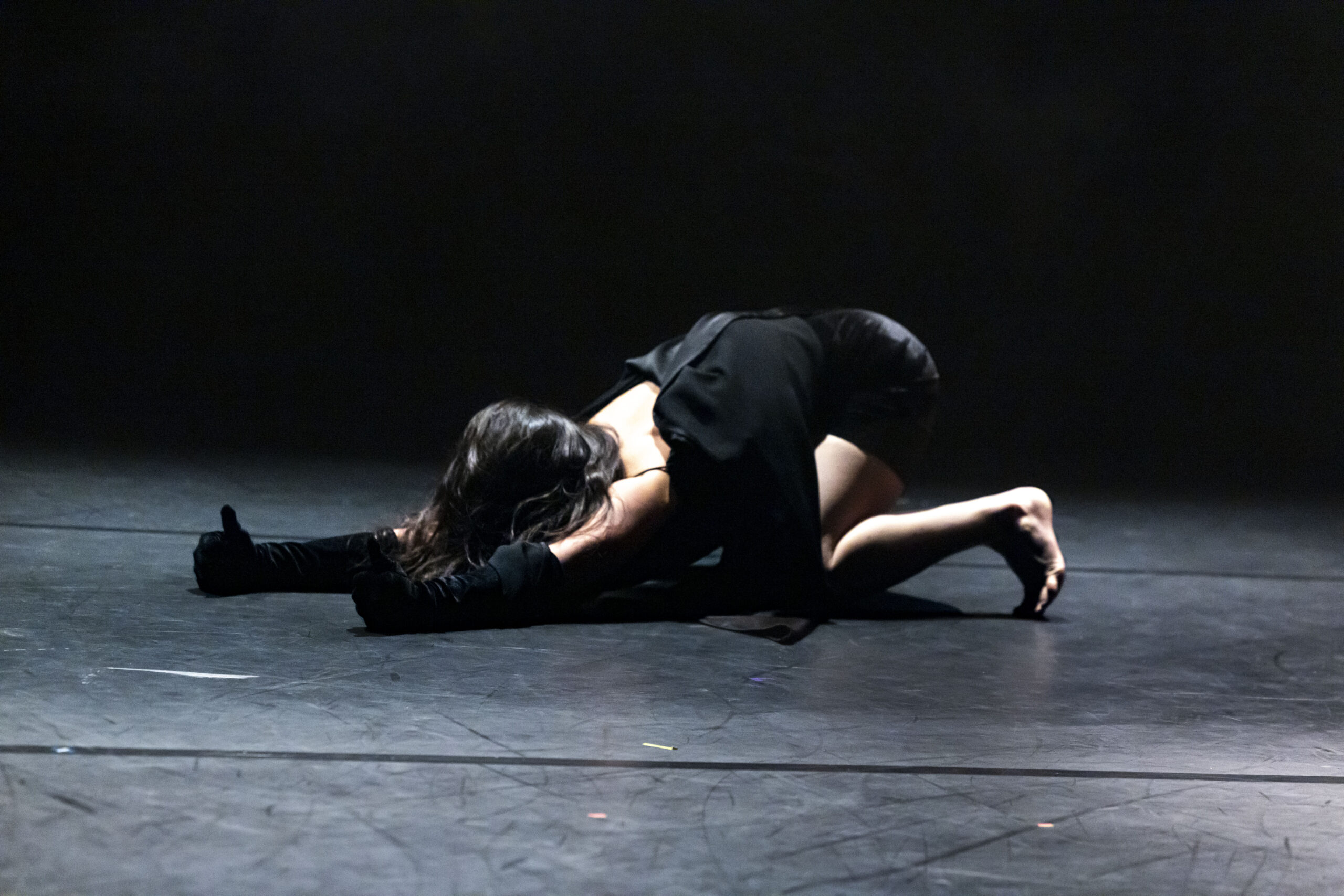
At the same time, the material began to move further away from recognisable social media poses. Through yoga-based forms and creature-like positions, the body started to become more ambiguous, sometimes reminding me of insects, amphibians, or hidden beings. I became excited by the possibility of hiding my face behind my hair, allowing the body to become less readable. This opened another layer of femininity for me: something mysterious, delicate, difficult to read, and not fully available to the gaze.
Below are some examples of the first movement patterns, sketches, and videos from this phase, where I began to discover how repetition could become one of the main strengths of the work.
20.05 – 10.06.2025
©Nadika Mohn
10.06 – 22.06.2025
©Nadika Mohn
Phase 4: July – October 2025
After half a year of playing with these forms, improvising in the studio, sharing material with other dancers, and reflecting on it, I still did not feel ready to fix the material. I realised that I was struggling to make choreographic decisions. I had a hard time connecting the floor-based material with the standing material, and understanding how one state could transform into the other.
At some point, I began to understand that the insect-like creature at the beginning had to open up. What I found difficult, but also important, was that this opening only seemed possible when the body became more sexualised. The movement towards standing did not come through freedom immediately, but through poses that exposed the body and made it more available to be seen.
This made me question why opening up was so strongly connected to being sexualised. The more the body revealed itself, the more it also seemed to fall into familiar images of femininity, desire, and display. The almost vulgar poses became a way of lifting the body from the floor into a standing position, but they also showed how quickly transformation can become tied to expectation.
I was also playing with the idea of “falling back,” which became essential for connecting the floor-based and standing material. I found something poetic in searching for a movement that could connect to the idea of falling back into old patterns, while still trying to stand up and open again. Through repetition, the body tries again and again, and something slowly begins to transform through exhaustion.
I repeated this falling movement for around 40 minutes, trying not to move too far from one spot, in order to discover what was present inside this simple action. My legs and back were burning, but there was something strangely beautiful in getting to know the action more deeply and feeling how the movement changed through repetition and exhaustion. I felt a quiet, honest power in this process: through exhaustion, the body can become freer, more honest, and less able to hold on to old habits or controlled ways of moving. Over time, the rhythm began to change. The continuous repetition slowly opened into moments of pause, interruption, release, and a different timing of movement and breath in the body. I also realised how playful the hair could become within the movement: throwing it, gathering it, brushing it back with the hands, almost like a ritual.
Around the same time, in mid-October, I was accepted into the MA Dance Research programme at Rambert School of Ballet and Contemporary Dance. This gave me new input and helped me to see dance and my own work from different perspectives. Because the programme is strongly connected to individual research, lectures, mentoring, and reflection, I began to understand how my studio practice could connect more deeply to theory. It also helped me to give more meaning to the work through reflection.
One of the first references Phaedra Petsilas introduced me to was the Creative Articulations Process. CAP contains six phases, or rather facets: “Opening”, “Situating”, “Delving”, “Raising”, “Anatomizing”, and “Outwarding”. Each facet offers prompts that foreground lived experience and embodiment as a way to reveal and articulate creative practice. I was especially drawn to the idea that “each phase might be thought of as illuminating a different face of the same thing, or a different side of the same issue, like a gem with many sides.” The CAP also gave me confirmation that it was valuable not to focus too quickly on finishing the piece. Instead of trying to settle the choreography as fast as possible, I began to understand the importance of using reflection as a tool to discover my topic, movement quality, and working approach more deeply. This slower process helped me to recognise what was already present in the material and to understand where the choreography could go from there.
15.10.2025
©Nadika Mohn
02-09.09.2025
©Nadika Mohn
At the same time, we decided to work with a black evening dress as the main costume, in order to explore the shift between the insect-like creature and a more recognisable female figure. At first, it was difficult to move in the dress or to be inspired by it, because it already created such a strong image when I was simply standing in it.
I would not normally wear this kind of dress, but I became interested in performing an unfamiliar version of femininity through it, something I could perhaps step into, become, or transform into something else. Over time, I began to understand the black dress, scarf, and gloves not only as costume elements, but as materials that could hide, expose, and transform the body. Priska also had the beautiful idea to use velvet for the gloves and the shorts underneath the dress, so that small hidden parts of the costume could suddenly catch the light when they appeared. In this way, the costume became part of the transformation between creature, image, and woman, leaving behind traces of multiple identities.
To break the iconic image of the evening dress and its sculptural, almost untouchable quality, I brought it to the floor. The insect-like movement began to disturb the elegance of the black gown and opened a connection to Franz Kafka’s The Metamorphosis. For me, this connection lies in the moment where a body is no longer seen as useful, beautiful, or socially readable, and therefore becomes strange, unwanted, or disturbing.
Gregor Samsa is reduced to his function and then rejected when he can no longer fulfil it. In a similar way, the female body on stage can also be reduced to an image, an expectation, or a role. By bringing the elegant dress into the floorwork, I wanted to disturb this image of femininity and let the body transform into something less recognisable, not only woman, not only object, but also creature, resistance, and a state of becoming.
In the paper Worldly-Being Out of World: Animality in Kafka’s The Metamorphosis, Hans Rainer Sepp writes: „When inner living is always invisible, it becomes a peculiar kind of visibility in the moment when the setting up of visualizing worlds fails and existence is thrown back to its promordial separation. Gregor’s animalitas is just this mode of a non-worldly visualisation caused by de-visualisation: the interruption and destruction of succeeding worldly imagination that terminates in a common world.“
This quote helped me understand the creature state as a way of making something invisible become present through the body. This was especially connected to covering my face with the hair, allowing the body to speak without relying on facial expression. I wanted to look inwards, towards the core of the work. Many of the floor movements were guided from the centre of the body, almost from a womb-like sensation, as if this inner centre was leading all the other parts.
19.12.2025
©Nadika Mohn
Phase 5: October – November 2025
The deeper I moved into my practice, the more I felt the need to place myself inside a wider social and theoretical context. The solo is very much about my identity, but I started to understand that identity is never only personal. It is shaped by the structures and environments we grow up in, by gender, class, race, education, and by the images we learn to recognise as beautiful or valuable.
Listening again to bell hooks’ Feminism Is for Everybody helped me to think about patriarchy not only as something that affects women in general, but as a system that is also connected to capitalism, beauty standards, and who is given visibility. It made me question where I place myself within this. As someone with a mixed ethnic background, coming from a working-class family, but growing up and being educated mainly in white environments, I feel the need to become more aware of how these structures have shaped my own body, my gaze, and my sense of belonging.
Jenny Roche’s text Embodying Multiplicity: The Independent Contemporary Dancer’s Moving Identity showed me to understand identity from another perspective: as something shifting and multiple. Roche writes about Emilyn Claid’s idea that different kinds of selves can be formed through different movement techniques, as “a ‘settling’ of embodiment acts into something of an identity”. This means that identity is not only something we express through movement, but something that can become located in and activated through movement. I recognise this in my own process: my identity changes not only between different work environments or social contexts, but also within this short solo work and the many ideas I had during its development. Each section feels like a different role or body, yet none of them feels less “me” than another.
Roche also suggests that this “performative self” may seem unstable or insubstantial when analysed, but can still feel very real for both the dancer and the audience in the moment of performance. This connects closely to my own questions around pretending and becoming: Can repeated performance shape who we are? At what point does acting become being? Through this, I began to see the solo as a place where identity is produced, negotiated, and transformed through choreography.
Another book I started to read during this period is Camille Paglia’s Sexual Personae. Especially in the beginning of the book, I found thoughts that helped me reflect on how I deal with beauty in the piece. Paglia connects sexuality strongly to nature, and describes it as a force that is not only soft, romantic, or liberating, but also darker, more powerful, and more difficult to control than many modern feminist positions might want to admit. I do not take her writing as a final truth, but it helped me question the wish to be completely free from sexuality, beauty, or hierarchy, and to think about the piece beyond victimhood.
One sentence that stayed with me is the idea that “beauty is the ordered, controlled form of the primal and the dark”. I connected this to the costume, the evening dress, the scarf, the gloves, and the image of the feminine body on stage. The beauty in the piece is not only decorative or passive; it holds something more unsettling underneath. Through Paglia, I began to think of the female body as something historically feared as well as desired: connected to nature, sexuality, breasts, belly, hips, fertility, and the earth. For my own work, this opened an important question: how can I use beauty without becoming trapped by it? In the solo, I started to understand beauty not only as an image made for the gaze of others, but as a form that can contain agency, seduction, discomfort, and transformation.
Butler’s idea that gender is not something fixed, but something created through the “stylization of the body,” where repeated bodily acts produce the illusion of a stable gendered identity, became important for how I understood the solo. Through my autoethnographic and phenomenological approach, I used my own bodily experience as material: acting, repeating gestures, movements, and styles, until something that at first felt performed slowly became embodied and part of me.
Listening to Butler’s audiobook Who’s Afraid of Gender? also opened another layer for me. Butler speaks about gender not only as a social construction, but as something connected to the social body, to life, and to the ways bodies are made meaningful or threatening. I was interested in her thought that gender can be embodied through many different affects: pleasure, fear, anxiety, freedom, or even terror. This connects closely to my solo, where femininity is not only represented as an image, but felt through the body as something unstable, powerful, and changing. In this sense, femininity became for me something closer to Mother Nature: not fixed, but constantly transforming. In this way, I understood the different states of the solo less as separate characters and more as different possible embodiments of femininity. The creature, the woman in the evening dress, the exposed body, and the body that hides behind hair or fabric are not contradictions. There are different ways in which gender, image, and identity pass through the body and become visible for a moment.
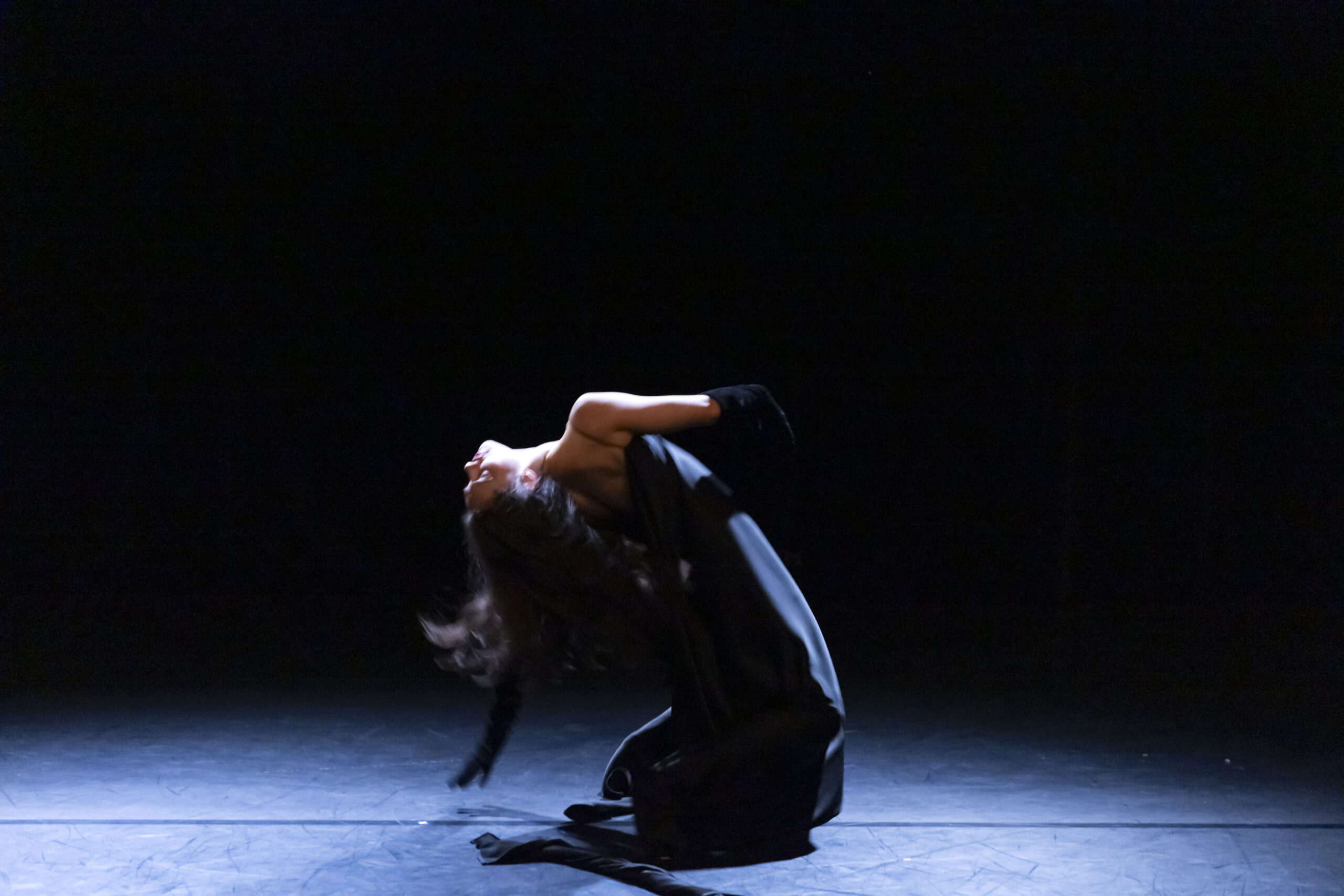
15.01.2026
©Niklaus Spörri
Phase 6: December 2025 – January 2026
When December arrived, it was finally time to bring the research into a performative form. After months of collecting material, questioning, filming, reading, writing, reflecting, and working with outside eyes and my whole artistic team, I had to make decisions and understand what the piece needed in order to meet an audience.
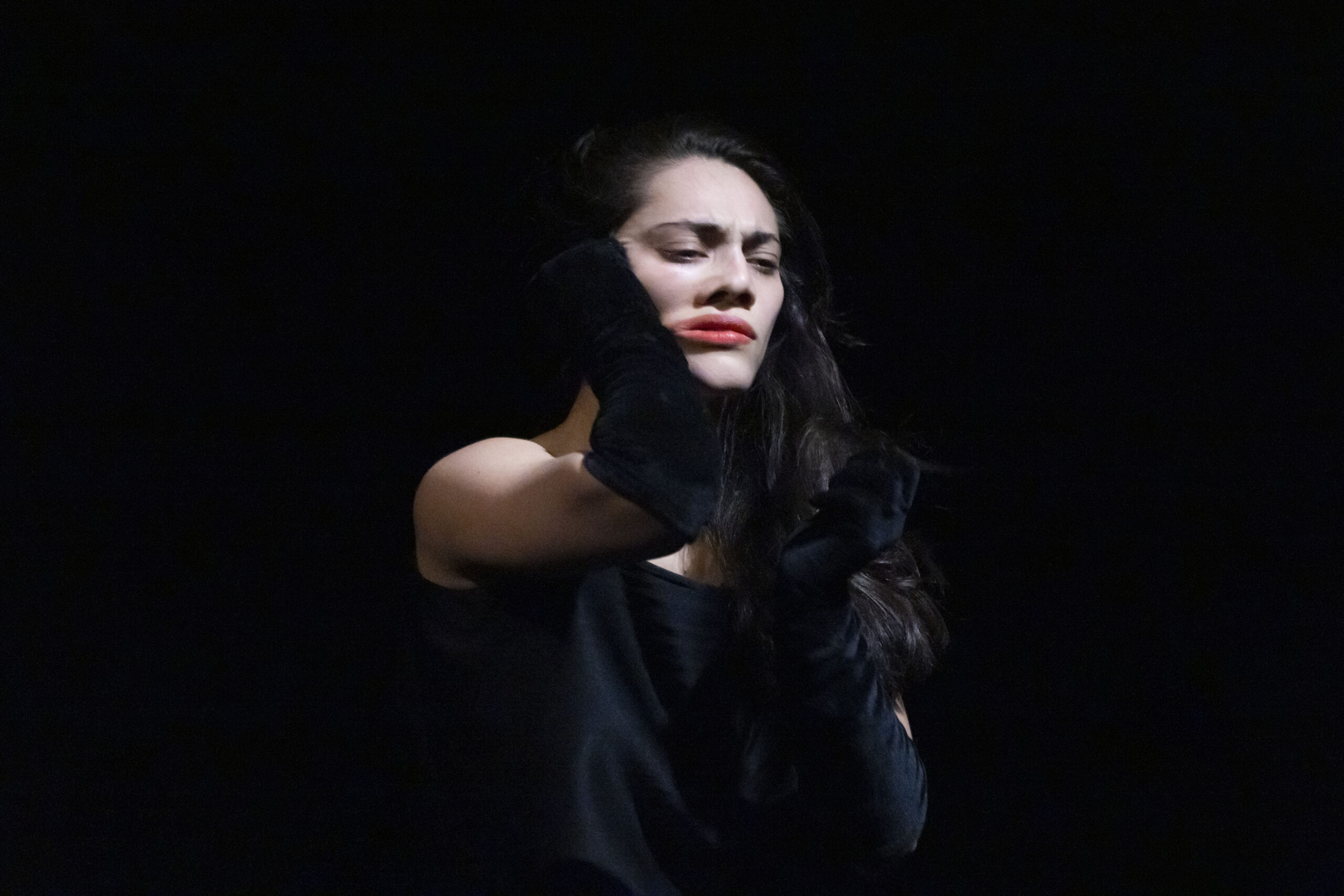
Like Me became a 13-minute solo about a female body moving between identity and projection. The work explores how a body is shaped by visibility, representation, and the gaze of others, while still trying to stay connected to an inner experience. A woman appears, disappears, humanized, dehumanized, transforms, and is read in different ways: as creature, image, object, performer, and self.
Through repetition and physical exhaustion, the solo asks how femininity is performed, learned, resisted, and transformed under the pressure of being seen. Inspired by Kafka’s The Metamorphosis, Like Me searches for what exists beneath the surface of an image: a body negotiating objectification, authenticity, beauty, shame, and the desire to become something new, iconic, while still falling back into old patterns, roles, and expectations.
I was excited to perform Like Me in front of an audience for the first time, because the presence of the spectators was an essential part of the research. The work is so much about being watched, being read, and becoming visible, so it could only fully reveal itself once it entered that shared space. Performing the solo meant testing how the gaze of the audience would affect the body, the image, and my own experience from the inside.
In this phase, the research shifted from something I was analysing in the studio into something that could be experienced live. The stage became a place where my questions around identity, femininity, beauty, exposure, gaze, and transformation could exist in direct relation to others.
Below is the full stage version of Like Me, performed by myself in January at Rote Fabrik in Zurich.
https://youtu.be/-ZbeL0t2yNA
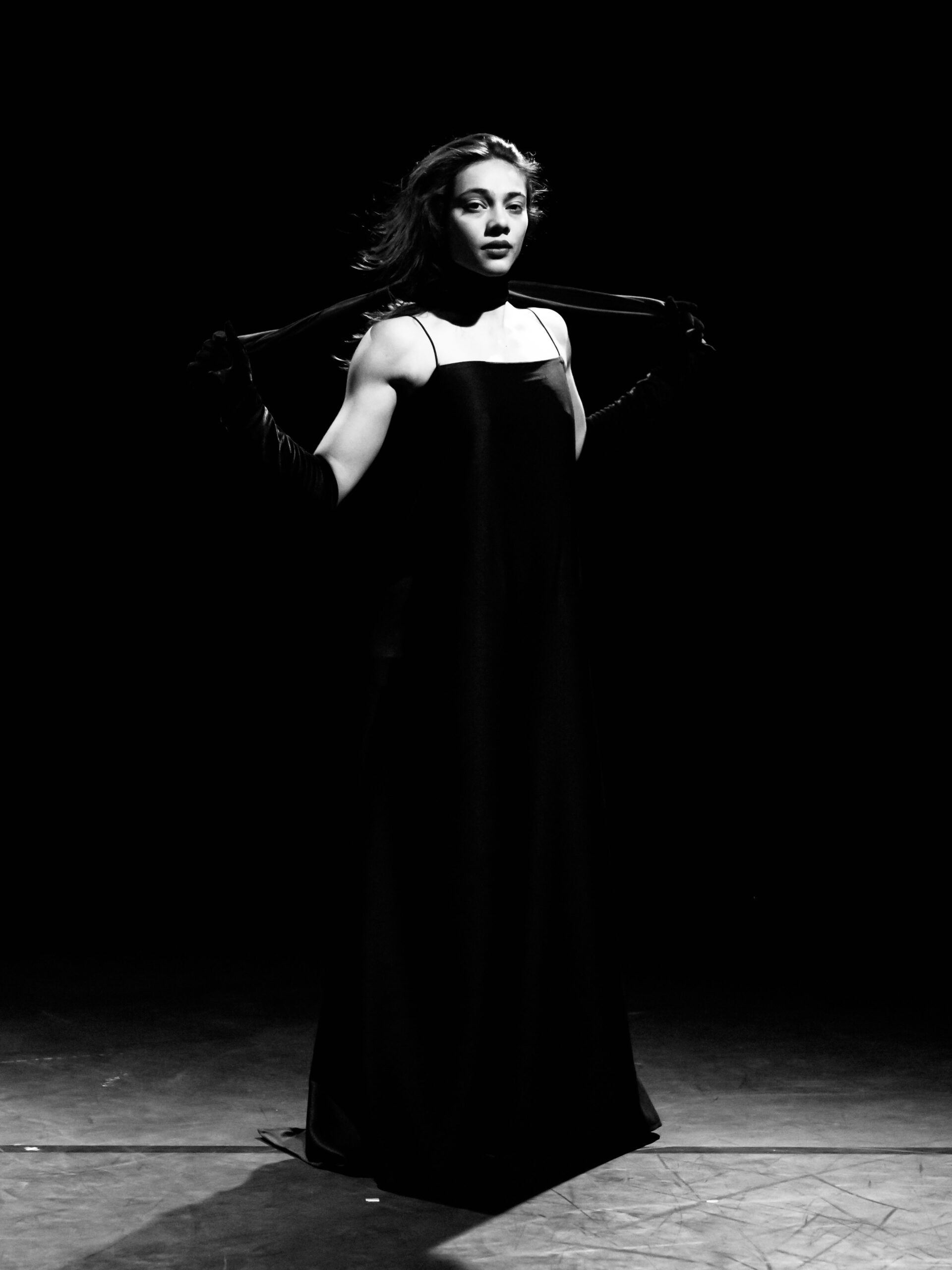
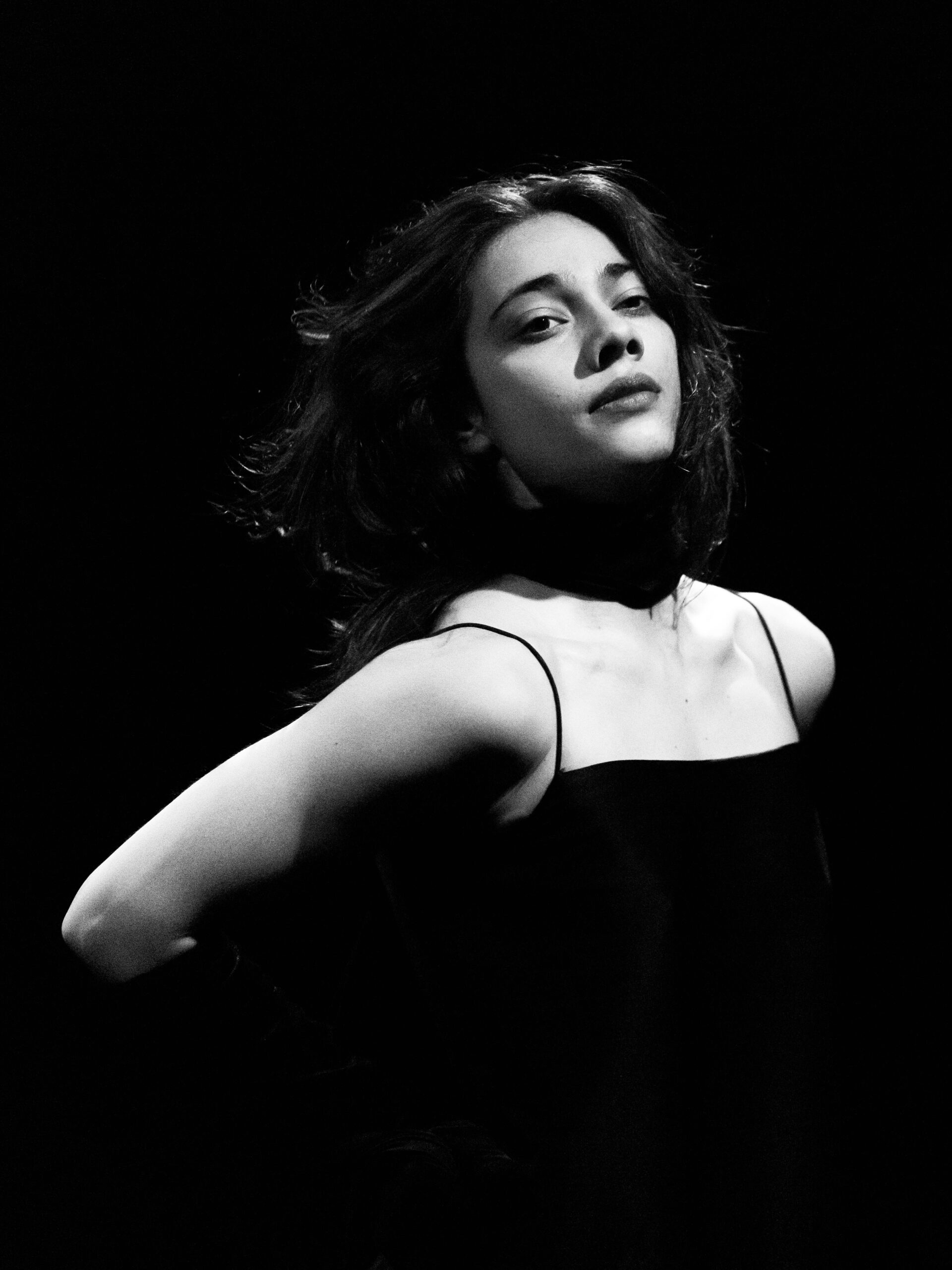
15.01.2026
©Niklaus Spörri
Phase 7: February – March 2026
After the performance, I needed time to digest what had happened and to understand what the piece had revealed. I returned to theory, conversation, and reflection. Through further meetings with my MA mentor, Kitty Winter, founder of ClownDance, I began to look more closely at the dramaturgical and feminist questions within the work. Our conversations around the image of the “little princess,” and its opposite, the older female figure as witch, widow, or dangerous woman, brought me back to questions around the fear of female power. These thoughts connected to Camille Paglia’s writing, but also to Britney Spears’ audiobook The Woman in Me, which I was listening to at the time.
In the audiobook, Spears speaks about the performance industry, reputation, and the pressure to please people. What stayed with me was how she describes an industry and a public image that did not allow her to fully become a woman. Instead, she was kept in the image of the “little princess.” She was treated like a girl for much of her life, not fully trusted to make decisions about her own image, body, food, money, or life. She also speaks about the difference between the male rock star and the female pop star, and how freedom, sexuality, maturity, and rebellion are read very differently depending on gender.
I felt many bridges between these thoughts and the dance industry. Sometimes there is an almost disturbing fascination with young female dancers as muses, images, or beautiful bodies on stage, while older female dancers, with all their experience, maturity, and knowledge, are not always given the same belief, desire, or visibility. Performing the solo made me question my own position within this. I realised that the piece does not only resist the male gaze; in some moments, or even many moments, it also serves it. At the same time, the work carries a desire to grow out of the mindset of the princess: to move towards a femininity that is not only pleasing, young, beautiful, or available, but also mature, powerful, dangerous, aggressive, and self-defined. I also began to ask myself how I can allow beauty to happen, rather than pretending it or performing it only in order to be desired.
Mulvey’s description of “the scopophilic instinct,” or the pleasure of looking at another person as an erotic object, became important for my thinking. She argues that the image of woman can become “raw material” for the active gaze of man. Although Mulvey writes about cinema, I began to wonder how this mechanism also appears in dance and performance. How does the female body on stage invite, resist, or disturb this gaze? How can I become more aware of the moments where I serve it? And how can I use these moments not only as something to avoid, but as a provocation within the work?
This opened an important question for my practice: how can the choreography expose the gaze while also being caught inside it? Rather than pretending that the work stands outside these structures, I became interested in showing the tension between pleasure, beauty, objectification, and resistance. The solo can therefore become a place where the female body is not simply presented as an image, but where the mechanisms of being looked at are made visible, questioned, and perhaps unsettled.
Another text that connected strongly to Mulvey’s thinking was Mary Ann Doane’s essay Masquerade Reconsidered: Further Thoughts on the Female Spectator. Her writing became important for my reflection on femininity and masculinity as masks. If “the mask is all there is,” then perhaps there is no pure or original femininity hidden behind it, but rather a continuous process of performing, repeating, adapting, and becoming.
For Like Me, I began to understand that the mask does not only hide the self; it also produces a self that can be seen, desired, feared, or rejected. In this sense, masquerade became a way for me to think about how the performer can create distance from the image she is presenting. Doane writes that masquerade can give the woman “distance, alienation, and divisiveness of self,” qualities that she connects to subjectivity, rather than reducing the woman to closeness or excessive presence. This was important for my work because it opened the possibility that performing femininity consciously can also create a critical distance from it. I also began to wonder whether wearing a mask can be a kind of safety manoeuvre: a way of not allowing the spectator to come too close, and a way of controlling what is exposed, hidden, offered, or refused.
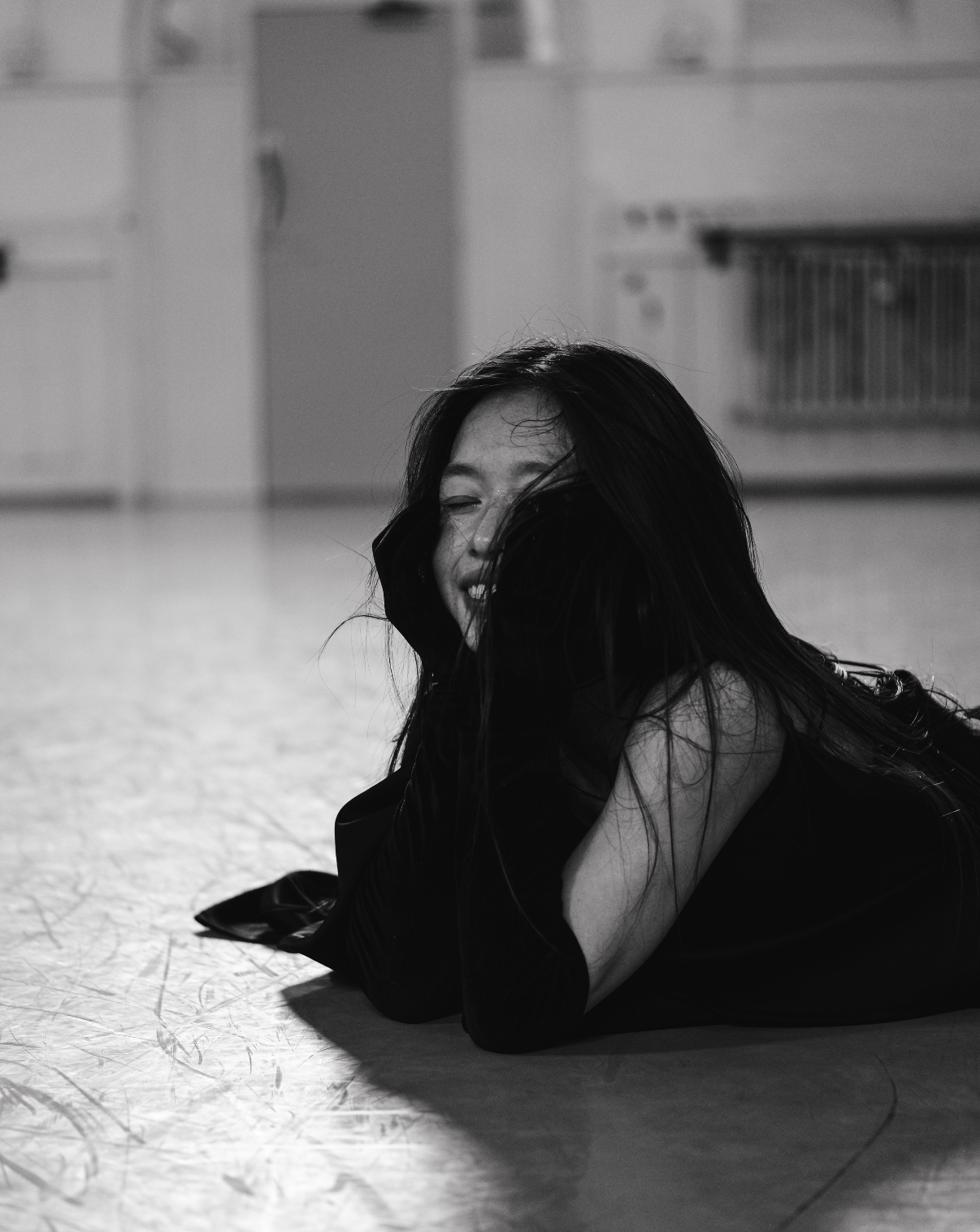
Through this phase, Like Me opened into a wider reflection on the masks we use to become visible or invisible to others. To understand this more clearly from the outside, as a choreographer and as a spectator, it became necessary to transmit the solo to other dancers. Until this point, I had mainly experienced the work from inside my own body. By giving the material to Romane Ruggiero, a French dancer based in Switzerland, and Ching-Ying Chien, a Taiwanese dancer based in England, I could begin to watch the solo from a distance. This allowed me to become a kind of spectator of my own work, and to observe how the gaze operates when my body is no longer the only body carrying the material.
The transmission process brought me closer to the question of voyeurism. Watching another dancer perform material that came from my own body created a strange double position: I was no longer only the performer being looked at, but also the choreographer looking. I became aware of my own gaze, my own desires, and my own expectations towards the female body on stage. This made the process of transmission important not only as a choreographic method, but also as a way to question how I look, what I project, and how the work changes when another body becomes the image.
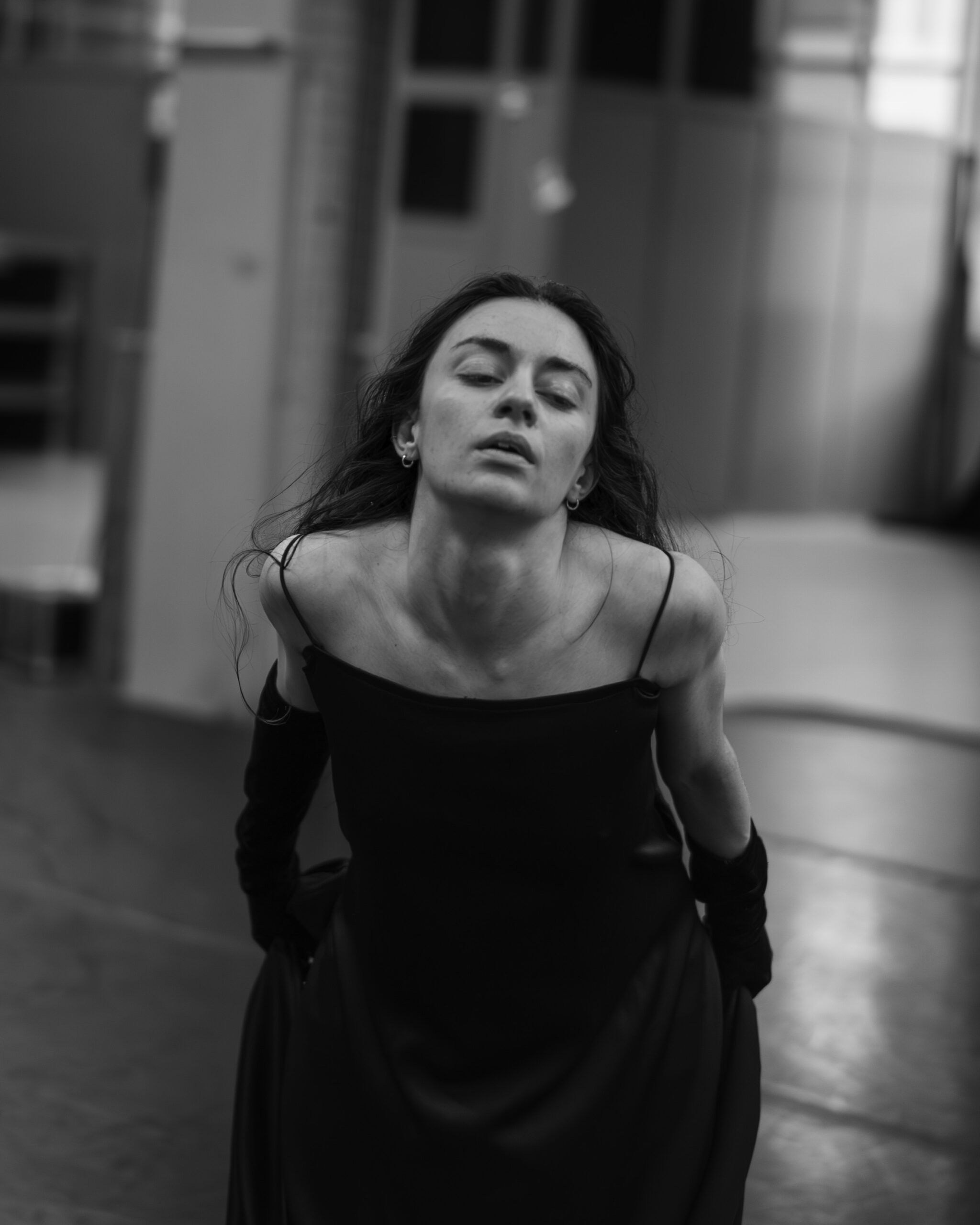
14.06.2026 – Romane Ruggerio
©David Lagerqvist
28.06.2026 – Ching-Ying Chien
©Nitika Jain
Phase 8: April 2026
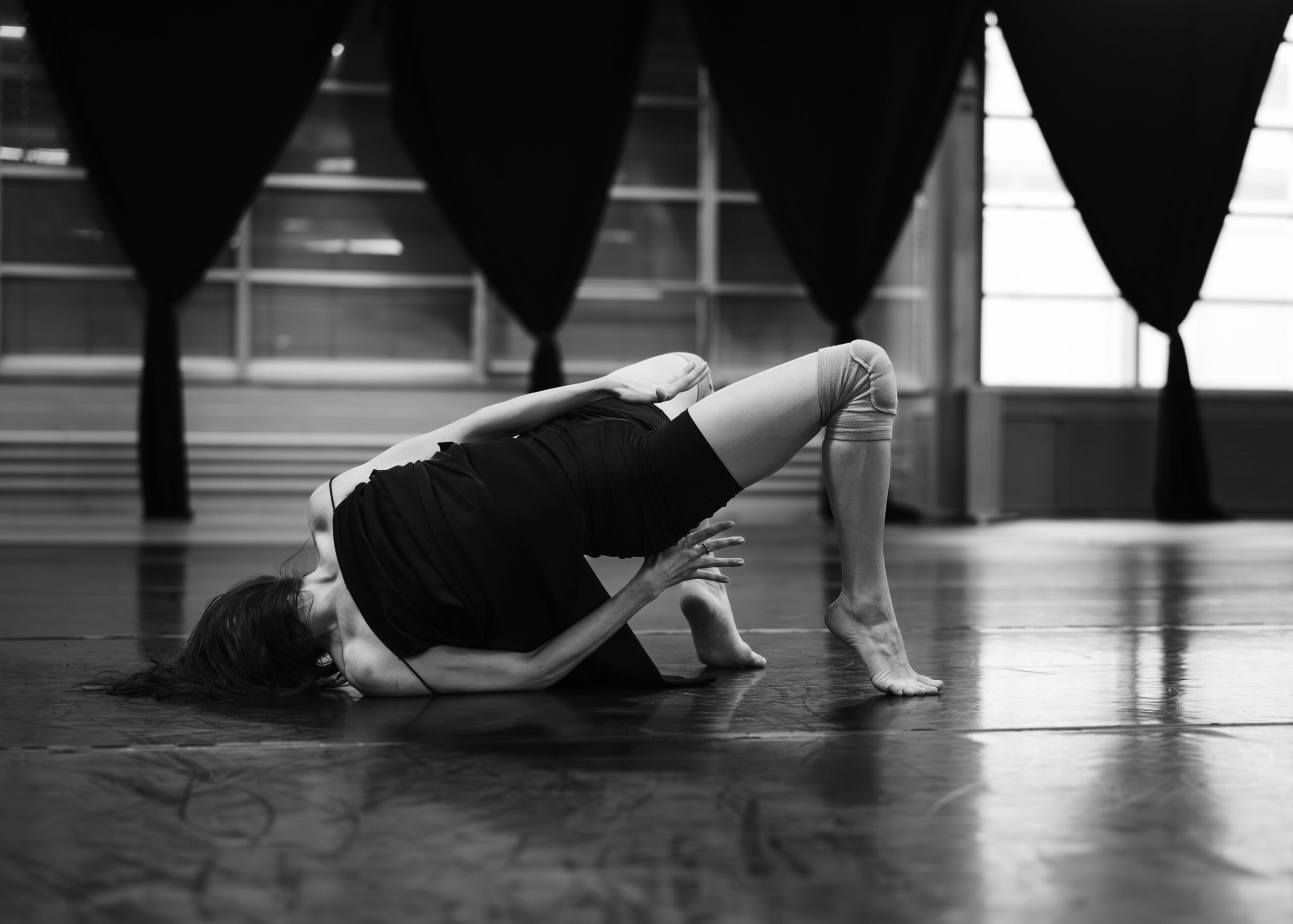
As I shifted more clearly into the role of choreographer, I became interested in what it means to become a spectator of my own choreography. Until then, I had mainly experienced Like Me from inside my own body or through video analysis. Transmitting the solo to other dancers allowed me to observe how the material changes when it is carried by another body, and how embodied identity is reshaped through repetition and through the gaze of others. It also became a way to use the choreography as a tool to go deeper into my artistic questions around visibility, objectification, and transformation.
During this phase, Sara Ahmed’s The Cultural Politics of Emotion helped me to think about how emotions circulate between performer, spectator, and the imagined gaze of the audience. Ahmed writes that emotions are not simply located “in” the individual or “in” the social, but are part of the process through which the psychic and the social are formed.
Through this, repetition became more than a choreographic structure. I began to understand that the emotion produced through repetition is what makes the piece socially accessible. The repeated movement does not only belong to the dancer’s body; it begins to create an emotional space that can be felt, read, or projected onto by others. In this way, repetition produces emotional states and social meanings at the same time.
Through the transmission of the solo, I began to ask how the same choreographic material can reveal shifts between humanisation, objectification, and dehumanisation when it passes through different bodies. Each dancer brought her own memory, training, presence, and lived experience into the work. This allowed me to see how the female body on stage can carry personal history and social projection at the same time. The solo became a place where emotion, gaze, and identity were not fixed, but constantly produced through the encounter between performer, choreographer, and spectator.
14.06.2026 – Romane Ruggerio
©David Lagerqvist
14.06.2026 – Romane Ruggerio
©David Lagerqvist
Phase 9: May 2026
For the transmission of Like Me, I decided to work with each dancer for three days and to end each process with a small sharing in front of an audience. I also created a notebook for the piece, which shared ideas around the three main parts or states of the solo: the insect-like body, the transition through sexualised poses, and the final iconic standing figure. The notebook included the thoughts behind each section, as well as all the music cues. Since the solo has more than fifty sound cues within twelve minutes, this became an important tool for understanding the structure, rhythm, and timing of the work.
The first transmission took place with Romane Ruggiero in St. Gallen, Switzerland. Romane had mainly danced in the same company throughout her career and had started freelancing around a year earlier. Since we had not worked together before, it was important for me to begin by introducing her to my movement language and artistic approach, while also taking time to get to know her own artistic vision, qualities, and way of working. I prepared short warm-ups and travelling exercises across the space before we moved directly into the choreography.
Because the steps and dramaturgy were already fixed, and because the solo had originally been created on my own body, the first day was mainly about learning the full structure, rhythm, and musicality of the piece. At the same time, we began to understand what needed to be adapted for Romane to enter the solo with her own personality. I asked her to go through the whole piece already on the first day, even though it was a lot of information. I was less interested in perfecting each step immediately and more interested in understanding the drive, energy, transformation, and musicality of the work.
On the second day, we went deeper into movement quality and detail. Romane remembered the structure very quickly, which allowed us to work more precisely. Watching her from the outside helped me understand which parts of the choreography were already clear and which moments needed to be changed, so that the meaning and dramaturgical direction became more accessible for the audience.
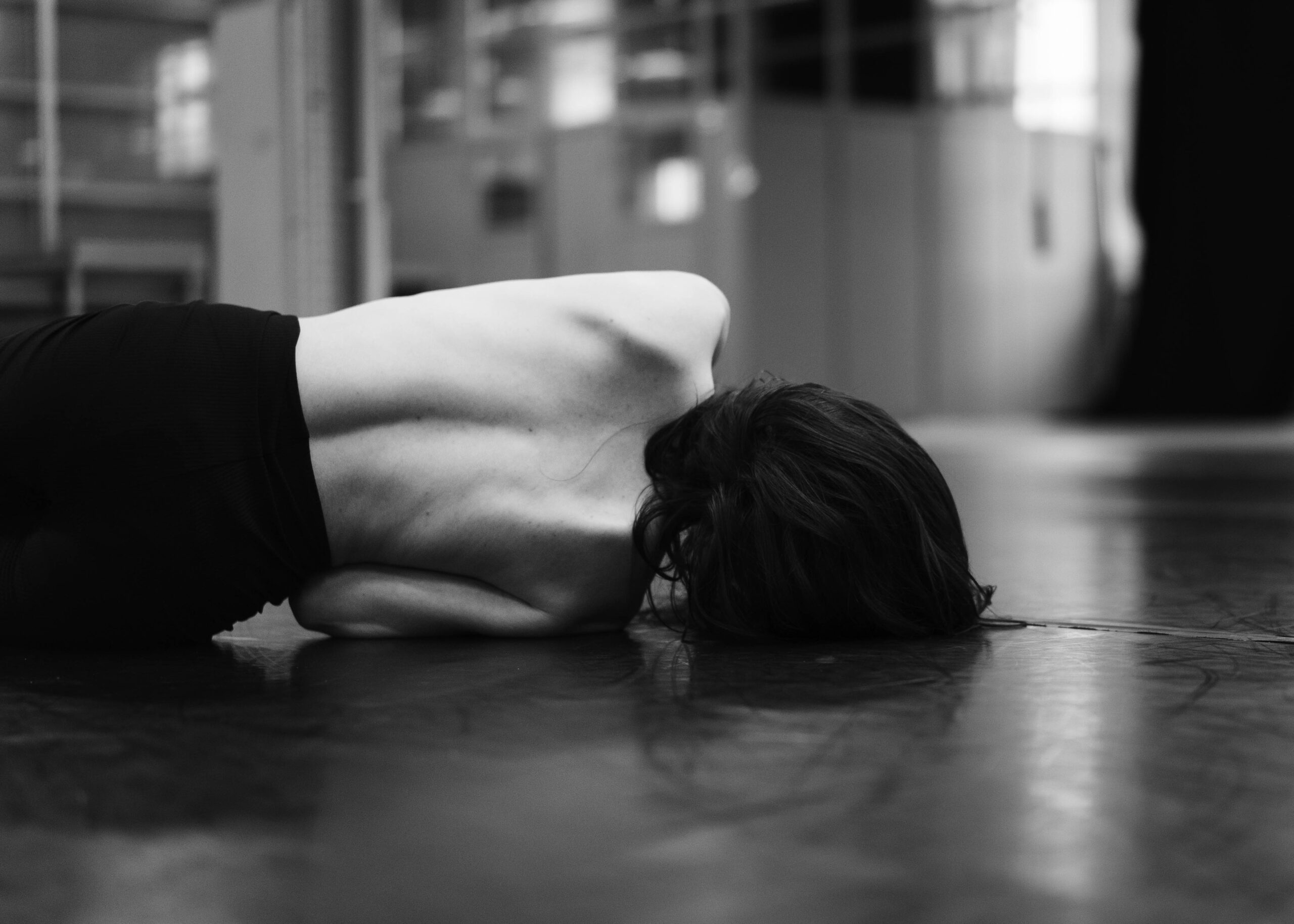
In the first section, which I call the insect part, the movement changed strongly when I asked her to move more from the womb or centre of the body. The second section, where the body begins to transform into a more recognisably female and sexualised form, was the most difficult to remember. The positions change very quickly, almost like being told which pose to take for a photograph, while also feeling rushed by the pressure of perfection. In the final standing section, where the iconic woman appears, I gave Romane more freedom and adapted certain movements, especially the falling material and the sections with the scarf. I felt that this part took the longest to bring the last layer into the piece: the connection between emotion and embodiment.
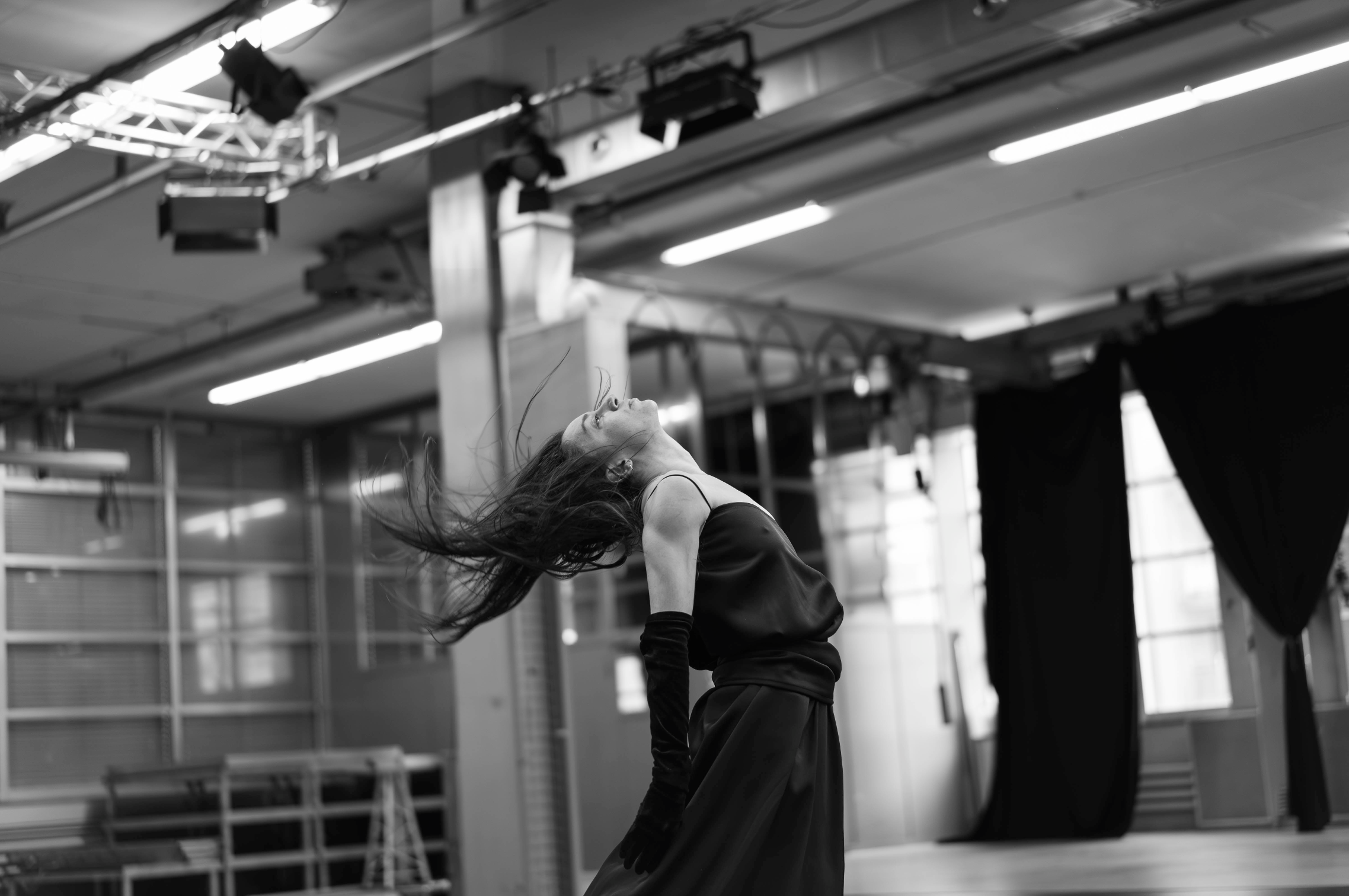
Romane performed the solo in a small sharing already on the third day. The audience was mainly made up of people from the dance field, so it was important for me to remember that this was not a neutral audience. In the discussion afterwards, I was interested in whether Romane felt sexualised inside the choreography while being watched. She shared that she did not feel the work was mainly about being sexualised. Instead, she experienced the first insect-like section as something more inward, almost as something she could move for herself. In contrast, the standing section made her feel more aware of performing for the audience and being watched. This observation was important for my research because it showed how different parts of the same solo create different relationships between the dancer, the gaze, and the feeling of being seen.
This also connected to Elizabeth Dempster’s writing on shame and dance training. Dempster writes that the discipline of dance training may allow a girl or young woman to overcome “feminine” shame by mastering her public image, creating “another body, a body freed of shame.” This idea helped me reflect on the standing section of Like Me, where the dancer is very exposed, but also highly controlled. The trained body can appear confident, beautiful, and available to the gaze, but this mastery can also hide vulnerability, discomfort, or shame. In this sense, the solo does not simply show a woman being objectified from the outside. It also reveals how dancers may learn to manage, control, and shape their own visibility.
Through working with Romane, I began to understand that objectification is not always experienced directly as sexualisation. It can also appear through the pressure to master an image, to be readable, to please, or to perform confidence. The insect section seemed to offer Romane a more private and inward relationship to the body, while the standing section brought the social body more strongly into focus: the body that knows it is being watched. This was nice to discover. The choreography creates different states of visibility, and each state produces a different relationship between shame, control, pleasure, and exposure.
Below you can find the recording of the sharing.
https://youtu.be/taOUP2dkRTs
14.06.2026 – Romane Ruggerio
©David Lagerqvist
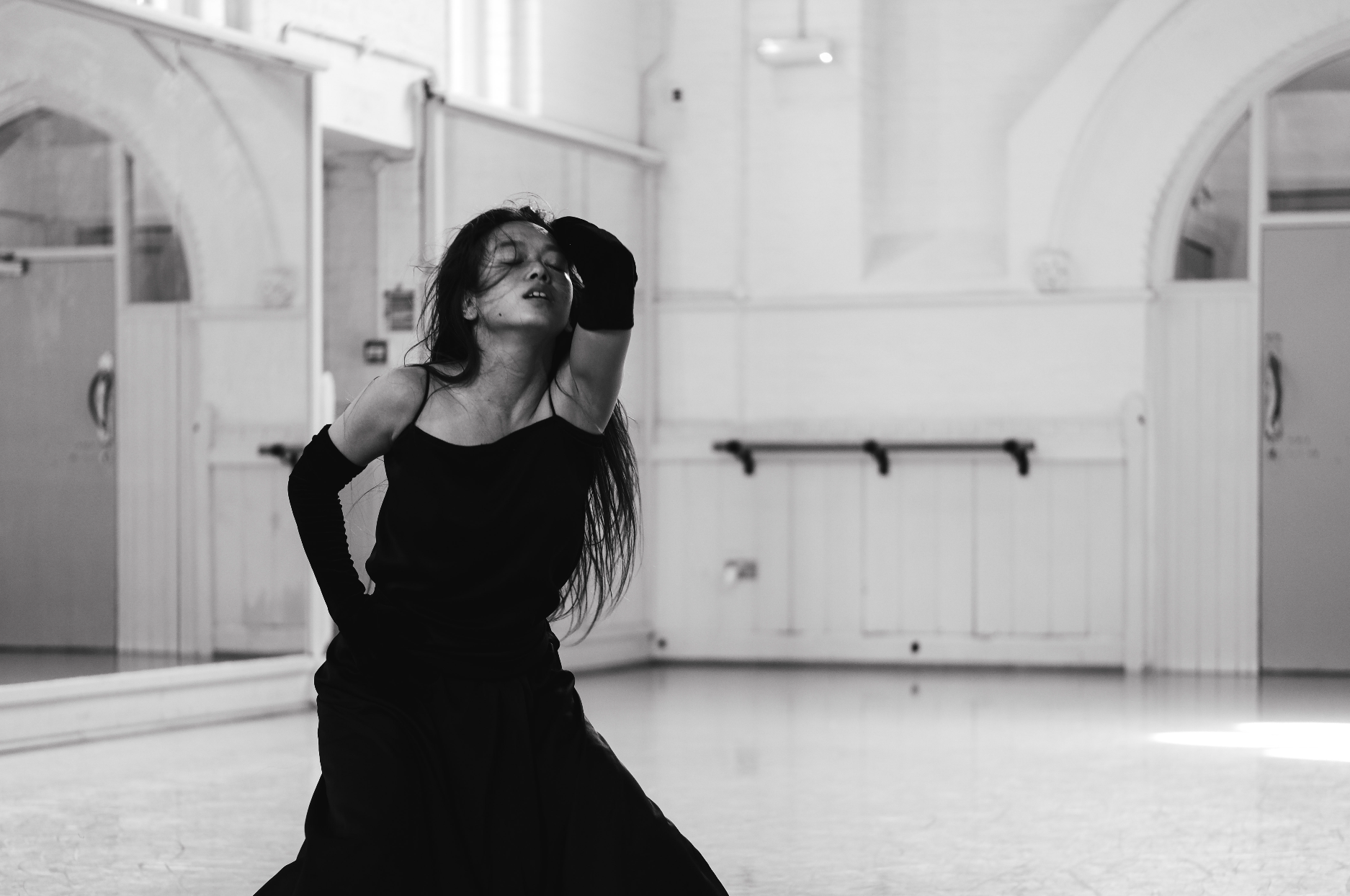
28.06.2026 – Ching-Ying Chien
©Nitika Jain
Phase 10: May 2026
Two weeks after the rehearsal period with Romane, I met Ching-Ying Chien in London at Rambert School of Ballet and Contemporary Dance. Ching-Ying and I had danced together in another production before, and I had always admired her way of working: her ability to find solutions, her strong engagement with topics, and her need to understand the reasons behind movement decisions.
The two dancers had very different approaches to memorising and entering the piece. I believe this was partly connected to their different backgrounds: Romane came from many years of dancing in one company, while Ching-Ying has worked as a freelancer for most of her career. They also have almost ten years of age difference, which perhaps influenced how they approached the work physically, emotionally, and structurally.
With Ching-Ying, I started in a similar way as I had with Romane. Each day began with a small exercise to enter the movement quality, idea, and approach of the piece. On the first day, I tried to give her the whole picture of the solo and go through the full structure. On the second day, we moved into more detail. One difference was that Ching-Ying was able to watch the recording of Romane’s sharing, which gave us another reference for how the piece could be performed. This allowed us to compare, adapt, and ask how certain parts could look or feel different on another body.
On the third day, Kitty joined us in the studio. It was valuable to have her outside perspective and to reflect together on the piece, the transmission process, and the way I was working with the dancer. The sharing with Ching-Ying took place two weeks later during the MA Days at Rambert School, in front of professors, classmates, and a few undergraduate students. This also gave the material more time to settle in her body.
Through this process, I started to understand transmission differently. Ching-Ying described learning someone else’s solo as entering a flat where someone had lived before. As a dancer, she tried to enter the thoughts, meanings, and world of the choreographer, while still bringing herself into the material. This image helped me think about how dancers can become objectified within the profession. Objectification does not only come from the audience or the outside gaze. It can also appear in the way dancers place themselves in service of an idea, image, or choreographic intention. As dancers, we often use our bodies as instruments to carry someone else’s thoughts, which requires openness, trust, and physical and emotional availability.
Also through the conversation with Kitty and Ching-Ying, another layer of the work became visible. I realised that the female body in the piece becomes more recognisable when it stands vertically: a woman in a beautiful dress, aware of being watched. In contrast, the horizontal floor material was often read as more creature-like and less connected to a sexualised female body, even though some of the positions were originally inspired by pornographic images. I think that keeping the feeling inward in these positions made them less exposed in a sexual way.
The standing poses, however, seem to connect more directly to how women are often presented in advertising: upright, displayed, and available to be looked at. In the vertical position, the female body becomes more readable as an image of femininity. This shift from horizontal to vertical therefore changed the relationship between the dancer and the gaze, and made me understand how strongly posture, direction, and display influence whether a body is seen as creature, woman, object, or subject.
One audience discussion during the sharing with Romane focused on a position where the body could be seen either as a frog or as a woman spreading her legs with her buttocks facing the audience. Some male dancers said they could see the sexualised image, but wanted to stay with the fantasy of the frog. This made me think about how a professional dance audience may try to protect the artistic image through its gaze, while someone outside the art context might read the same position more directly as sexual. Here, I return to Dempster’s thought that the trained body may not only be looked at, but may also be trained to manage being looked at. In Like Me, the question is therefore not only whether the body is sexualised, but how dancer and audience together produce, protect, or disturb that reading.
Below you can find the studio recording of Ching-Ying.
https://youtu.be/DdAObfrQhgA
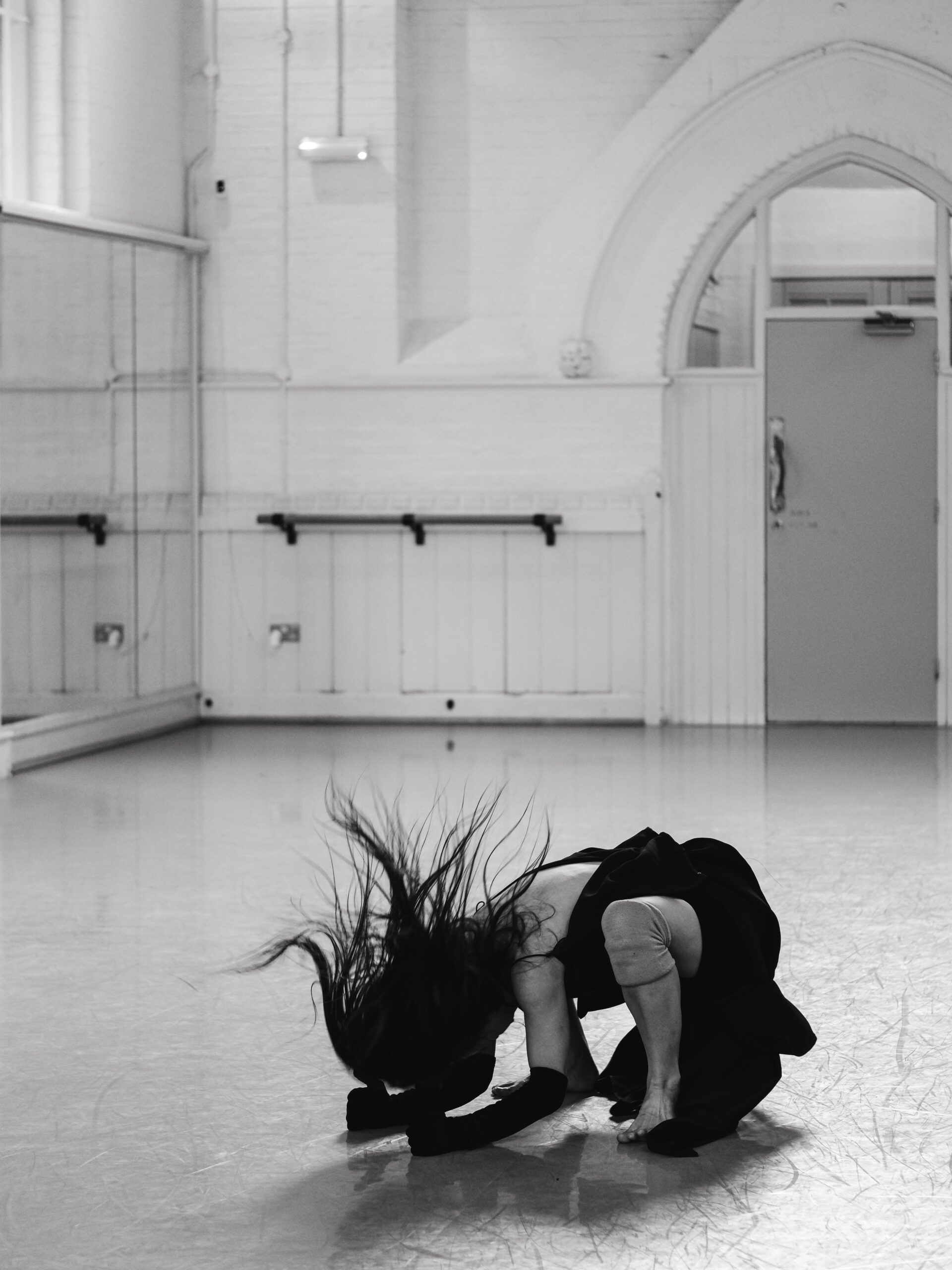
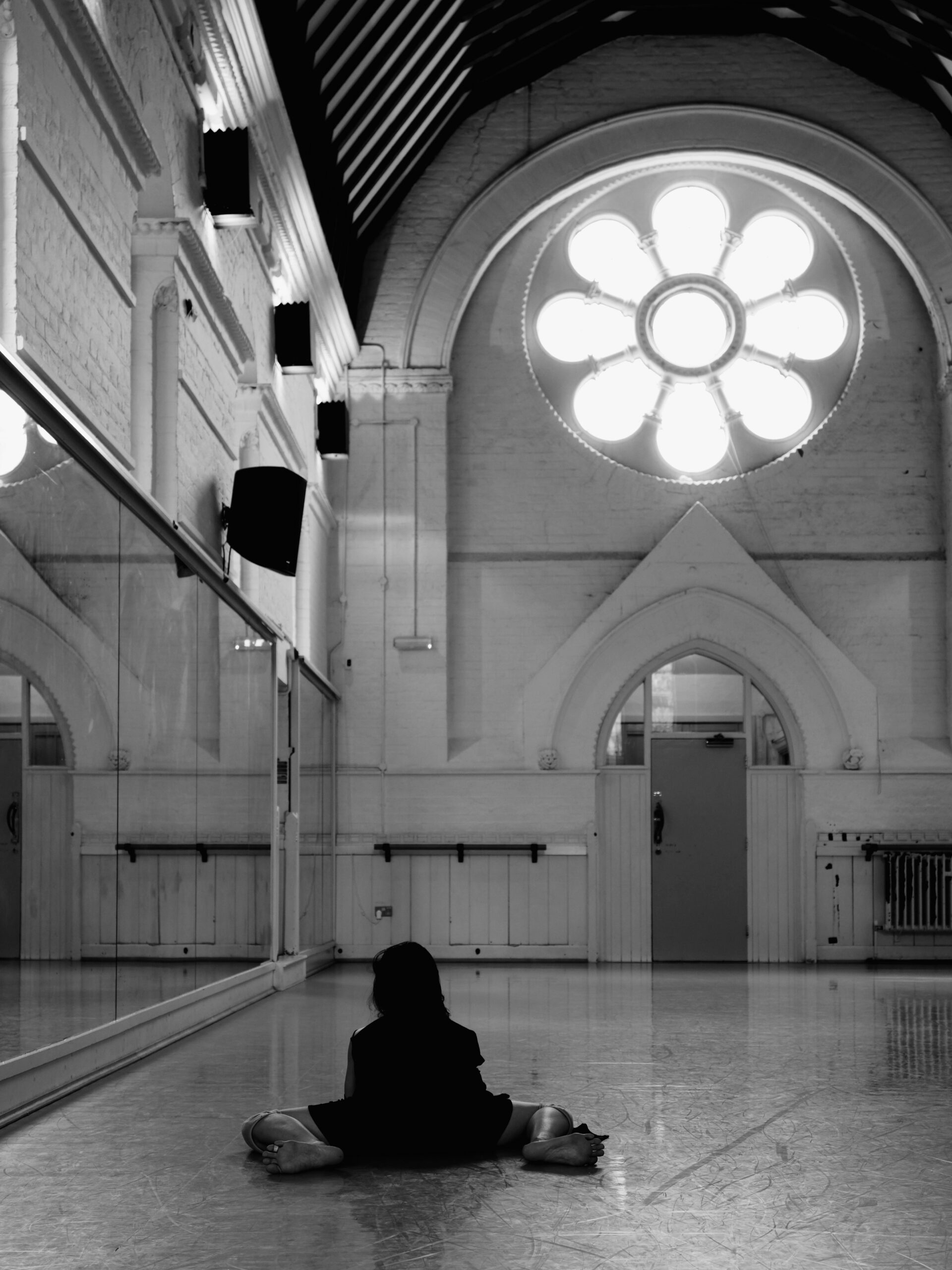
28.06.2026 – Ching-Ying Chien
©Nitika Jain
28.06.2026 – Ching-Ying Chien
©Nitika Jain
Phase 11: June 2026
Getting back to my research question: How is embodied identity reshaped through choreographic repetition and the gaze of others in performance?
Because both dancers had only a short time to learn and perform the existing solo, the question of time became very present. I started to wonder how much time a dancer needs to fully embody a choreography. At what point can we say that the material is no longer only being remembered, repeated, or performed, but has become part of the dancer’s body, memory, and identity?
This made me realise that a second cast can never simply reproduce the first version, especially when the first body had much more time to discover the material from the inside. The first cast often goes through a longer process of searching, failing, repeating, and slowly understanding the movement quality. A later cast may save time because the structure and many choreographic decisions already exist, but this also means that there is less time for the dancer to build their own relationship with the material.
For my research, this became an important question: how does the amount of time given to a dancer change the depth of embodiment? I feel that if the dancers had more time to settle the solo in their bodies, they would also have more freedom to play with the material, bring more of themselves into it, and find more pleasure inside the performance. Through this, I began to see the solo not only as something that can be transmitted, but as something that needs time to be inhabited.
It was also interesting to see that in both sharings the audience was not neutral. Most people came from an art or dance environment, and this clearly shaped how the work was received. I felt that they gave the performance space to exist inside its own fantasy, and that they understood the artistic vision behind it. In this way, the audience also interacted with the dancer’s identity by creating a professional space of trust. This may have given the dancer more freedom to stay inside the material, rather than feeling exposed or judged.
The same choreography could have been experienced very differently in front of another audience, for example a group of teenagers who might have laughed during certain parts of the piece. For me, this showed that the gaze of the audience does not only interprets the work from the outside, but can also affect how safe, free, or visible the dancer feels while performing. Their feedback on the topic was very valuable, and I was especially touched that some young female dancers felt strongly connected to the work. This gave me hope for a younger generation of dancers and for the possibility that these questions around gaze, visibility, and the female body can open new conversations and awareness.
Returning to my second research question, how does the transmission of a solo across different bodies reveal shifts between humanisation, objectification, and dehumanisation under the gaze, I began to understand that there is no single answer. The insect-like floor section felt like something we could all share, even though each dancer approached it from a very individual inner place. In contrast, the standing section looked more different on each body, perhaps because it was more connected to performing an image of femininity and being seen. During the process, I felt that the strongest differences between us were shaped by our different educations, working environments, artistic approaches, ethnic backgrounds, ages, and relationships to being seen.
A next step could be to transmit the solo to a dancer who is less “like me”, for example, someone who does not identify as female, or even a white male dancer. This could open another layer of the research by asking how the material changes inside a body with a different relationship to femininity, exposure, objectification, and power. It could also allow me to question scopophilia and the white male gaze more directly from the inside, through the experience of the performer rather than only through the gaze of the spectator.
As a choreographer, I want to keep developing a more conscious relationship between my idea, the dancer’s embodied experience, and the audience’s gaze. Objectification is not something I want simply to avoid. I want to recognise it, expose it, and use it as a provocation, so that it becomes something I can question and work with dramaturgically.
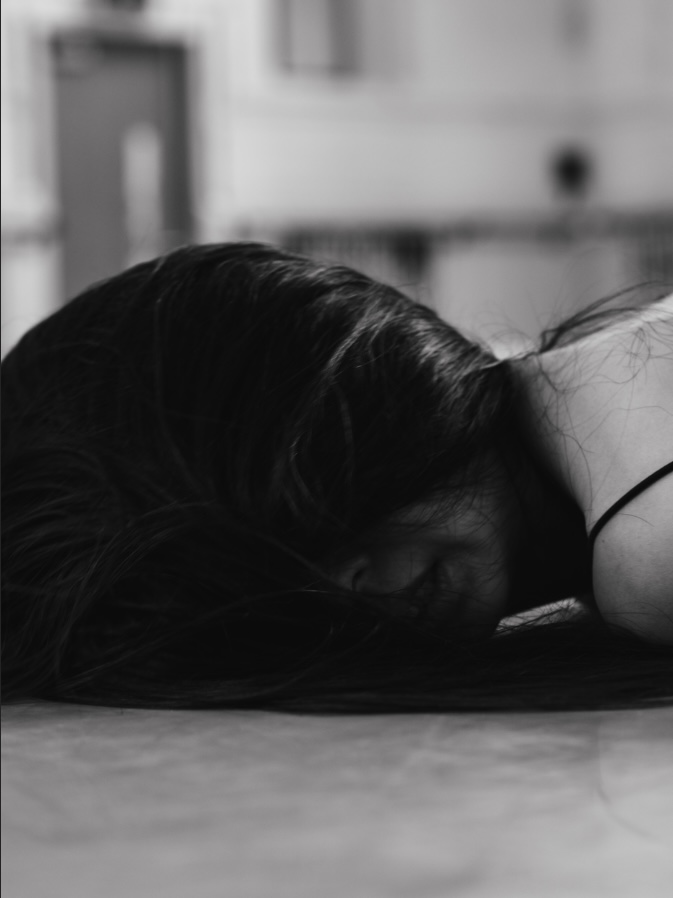
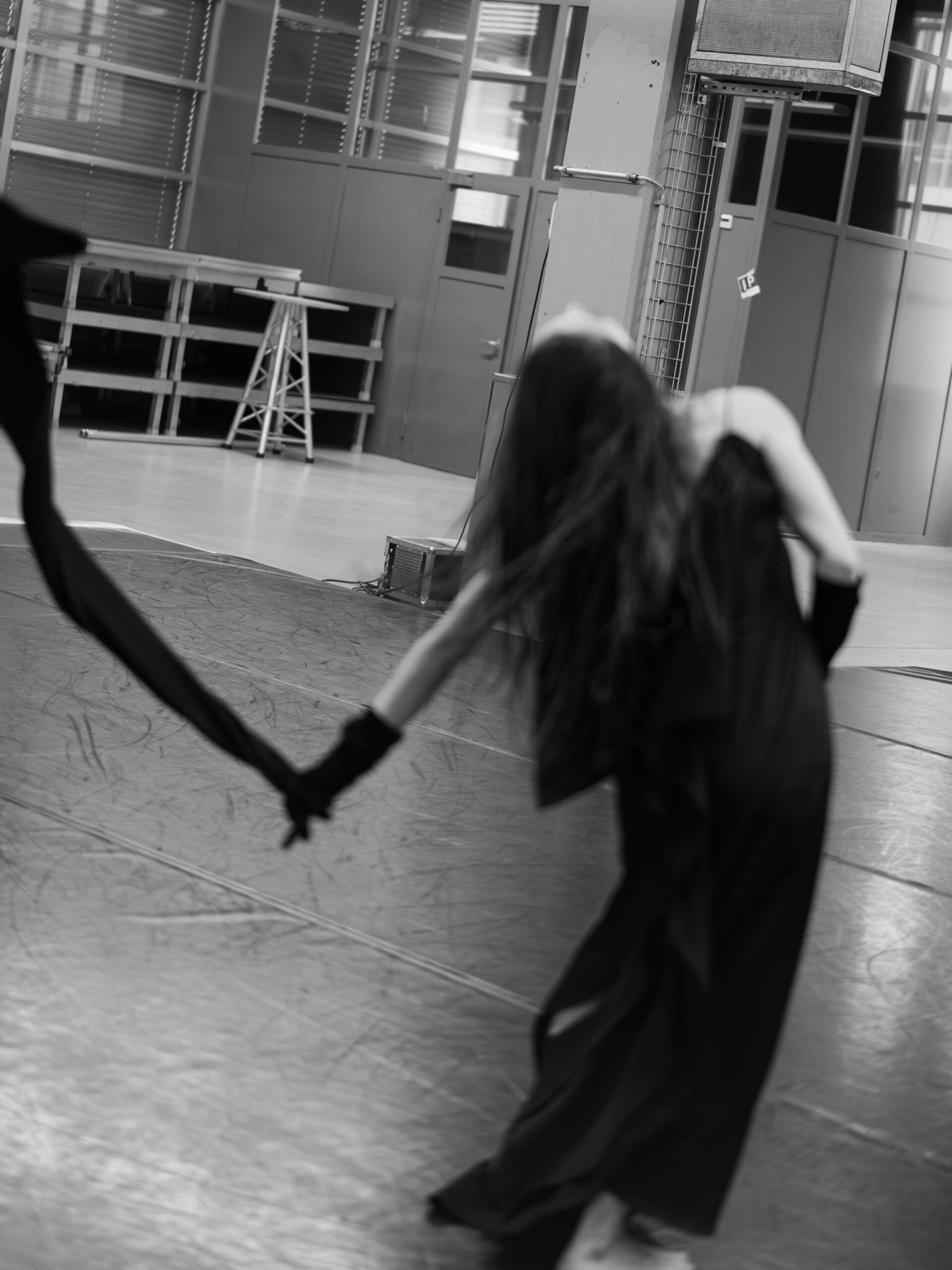
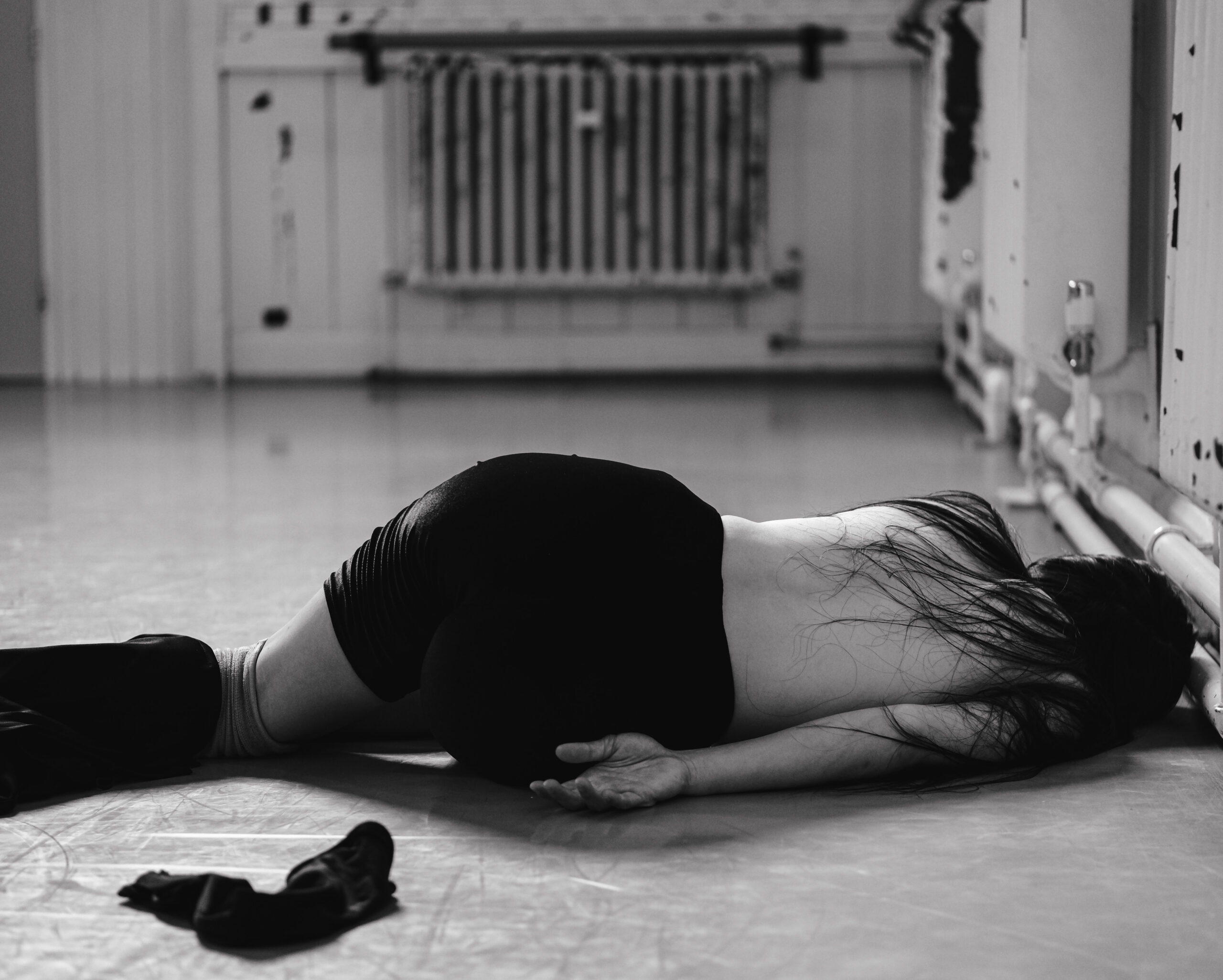
28.06.2026 – Ching-Ying Chien
©Nitika Jain
Bibliography
Ahmed, S. (2014) The Cultural Politics of Emotion. 2nd edn. Edinburgh: Edinburgh University Press.
Bacon, J.M. and Midgelow, V.L. (2014) ‘Creative Articulations Process (CAP)’, Choreographic Practices, 5(1), pp. 7–31.
Banes, S. (2008) Dancing Women: Female Bodies Onstage. London: Routledge, pp. 10–21.
Barbour, K.N. (2012) ‘Standing Center: Autoethnographic Writing and Solo Dance Performance’, Cultural Studies Critical Methodologies, 12(1), pp. 67–71.
Burt, R. (2022) The Male Dancer: Bodies, Spectacle, Sexualities. 3rd edn. London: Routledge, pp. 39–58.
Butler, J. (2017) ‘When Gesture Becomes Event’, in Street, A., Alliot, J. and Pauker, M. (eds.) Inter Views in Performance Philosophy: Crossings and Conversations. London: Palgrave Macmillan, pp. 171–191.
Butler, J. (2024) Who’s Afraid of Gender? [Audiobook]. Read by Judith Butler. London: Penguin Audio.
Dempster, E. (2016) ‘The Economy of Shame or Why Dance Cannot Fail’, in DeFrantz, T. and Rothfield, P. (eds.) Choreography and Corporeality: Relay in Motion. London: Palgrave Macmillan, pp. 155–172.
Doane, M.A. (1988–89) ‘Masquerade Reconsidered: Further Thoughts on the Female Spectator’, Discourse, 11(1), pp. 42–54.
Farmer, C. and Kindred, H. (eds.) (2024) The “Female” Dancer: A Soma-Scientific Approach. 1st edn. London: Routledge.
hooks, b. (2000) Feminism is for Everybody: Passionate Politics. Cambridge, MA: South End Press.
hooks, b. (2021) Alles über Liebe: Neue Sichtweisen [Audiobook]. Read by Luise Georgi. Hamburg: Harper Audio.
Mulvey, L. (1975) ‘Visual Pleasure and Narrative Cinema’, Screen, 16(3), pp. 6–18.
Paglia, C. (1990) Sexual Personae: Art and Decadence from Nefertiti to Emily Dickinson. New Haven, CT: Yale University Press.
Roche, J. (2011) ‘Embodying multiplicity: The independent contemporary dancer’s moving identity’, Research in Dance Education, 12(2), pp. 105–118.
Sepp, H.R. (2014) ‘Worldly-Being Out of World: Animality in Kafka’s The Metamorphosis’, Environmental Philosophy, 11(1), pp. 93–107.
Sklar, D. (2000) ‘Reprise: On Dance Ethnography’, Dance Research Journal, 32(1), pp. 70–77.
Spears, B. (2023) The Woman in Me [Audiobook]. Introduction read by Britney Spears; narrated by Michelle Williams. New York: Simon & Schuster Audio.
Winship, L. (2025) ‘“The audience chucked food at us!” Emilyn Claid on angry shows, her ballet shame and gardening for Martha Graham’, The Guardian, 22 April. Available at: https://www.theguardian.com/stage/2025/apr/22/emilyn-claid-ballet-dance-trembling-forest (Accessed: 6 March 2026).